AI Tools for Real Estate Agents: A Practical Guide for 2026
AI Is No Longer “New” — It’s Becoming Practical
Artificial intelligence has moved past the hype phase in real estate. In 2026, real estate agents are no longer asking if AI tools are worth using — they’re asking which tools actually help and how to use them without losing authenticity.
The most successful agents are using AI to handle repetitive, time-consuming tasks so they can focus on what matters most: relationships, negotiations, and closing deals. This article introduces the key AI tool categories shaping real estate workflows in 2026 and serves as a starting point for a deeper series exploring each area in detail.
TL;DR: AI tools for real estate agents in 2026 fall into five practical categories—writing, listing media, lead response, analytics, and trust. This guide explains what’s trending, which tools agents are exploring, and how to use AI without losing authenticity.
In this guide:
- AI Writing & Messaging Tools for Real Estate Agents
- AI Tools for Listing Media
- AI Lead Response & Follow-Up Automation
- AI Operations & Analytics Dashboards
- Trust & Authenticity Tools
What’s Actually Trending for Real Estate Agents in 2026
Rather than one “magic tool,” AI adoption is happening in five practical categories. Each supports a specific part of an agent’s daily workflow. Together, these tools reflect how AI is being used today — not as a replacement for agents, but as a support system for speed, consistency, and insight.
1️⃣ AI Writing & Messaging Tools for Real Estate Agents
Speed, consistency, and better first drafts
AI writing tools are often the first place real estate agents start using AI because they deliver immediate time savings with very little setup. These tools help agents handle the constant writing demands that come with listings and client communication.
AI writing tools can help agents:
- Draft listing descriptions faster
- Create email and SMS follow-ups
- Write social captions and blog content
- Prepare objection-handling scripts
Popular AI Writing Tools Agents Are Exploring
ChatGPT (OpenAI)
- Use cases: Listing descriptions, follow-up emails, social captions, objection scripts
- Price: Free / Pro version available
- Why agents like it: Flexible, conversational, and easy to adapt to an agent’s personal voice
Jasper AI
- Use cases: Marketing copy, brand-consistent messaging, longer-form content
- Price: Paid plans
- Why agents like it: Strong templates and brand voice controls for teams
These tools work best as assistants, not replacements. The strongest results come when agents treat AI output as a first draft — then review, personalize, and adjust the language to reflect their market knowledge, brand tone, and compliance needs.
In a future article in this series, we’ll take a deeper look at AI writing and messaging tools, including best practices, common mistakes, and real-world examples of how agents are using them effectively.
2️⃣ AI Tools for Listing Media
Photos, staging, and visual marketing that stops the scroll
AI-powered listing media tools help agents elevate their visuals without the time and cost of traditional reshoots or physical staging. As buyers continue to browse listings online first, strong visuals remain one of the most powerful differentiators.
AI listing media tools can help agents:
- Enhance listing photos

- Virtually stage empty rooms
- Create marketing-ready images faster
- Improve consistency across listing presentations
Popular AI Listing Media Tools Agents Are Exploring
Immo Magic https://immomagic.com/
- Use cases: Virtual staging, photo enhancement, listing visuals
- Price: Free to paid plans
- Why agents like it: Designed specifically for real estate visuals and easy to use for quick upgrades
Zillow AI Virtual Staging (Showcase listings) https://www.zillow.com/agents/showcase/
- Use cases: AI-powered virtual staging integrated into listing platforms
- Price: Platform-dependent
- Why agents like it: Signals where major real estate platforms are investing in AI-driven visuals
These tools are most effective when used thoughtfully. Successful agents use AI visuals to enhance listings while maintaining realistic representations of the property.
In a future article in this series, we will take a deeper look at AI tools for listing photos, staging, and video — including best practices and disclosure considerations.
3️⃣ AI Lead Response & Follow-Up Automation
Speed-to-lead without losing the human touch
Fast response times are critical in real estate, but managing inquiries across multiple channels can be overwhelming. AI-powered lead response tools help agents stay responsive while maintaining organization and consistency.
AI lead response tools can help agents:
- Respond instantly to new inquiries
- Qualify and route leads
- Trigger follow-up reminders
- Keep prospects engaged between touchpoints
Popular AI Lead Response Tools Agents Are Exploring
Realtor.com AI Marketing Tools https://www.realtor.com/marketing/resources/category/artificial-intelligence/
- Use cases: Lead follow-up assistance, marketing automation
- Price: Varies by service
- Why agents like it: Built specifically for real estate workflows with a focus on affordability
Agents new to AI often start by testing one tool on a single task—such as drafting a listing description—before expanding to other workflows.
Chatbots integrated with CRM platforms https://www.proprofschat.com/ https://www.realty-ai.com/
- Use cases: Website chat, lead capture, automated replies
- Price: Free to paid plans depending on provider
- Why agents like it: Improves response time without requiring constant manual monitoring
The key is balance. Agents who see the best results use AI to support communication — not replace personal outreach.
In a future article in this series, we’ll explore AI lead response tools in more detail and discuss how to keep automation from feeling impersonal.
4️⃣ AI Operations & Analytics Dashboards
Understanding what’s working — and what’s not
AI-driven dashboards help agents move beyond guesswork by bringing performance data into a single, easy-to-understand view. These tools support smarter marketing and time management decisions.
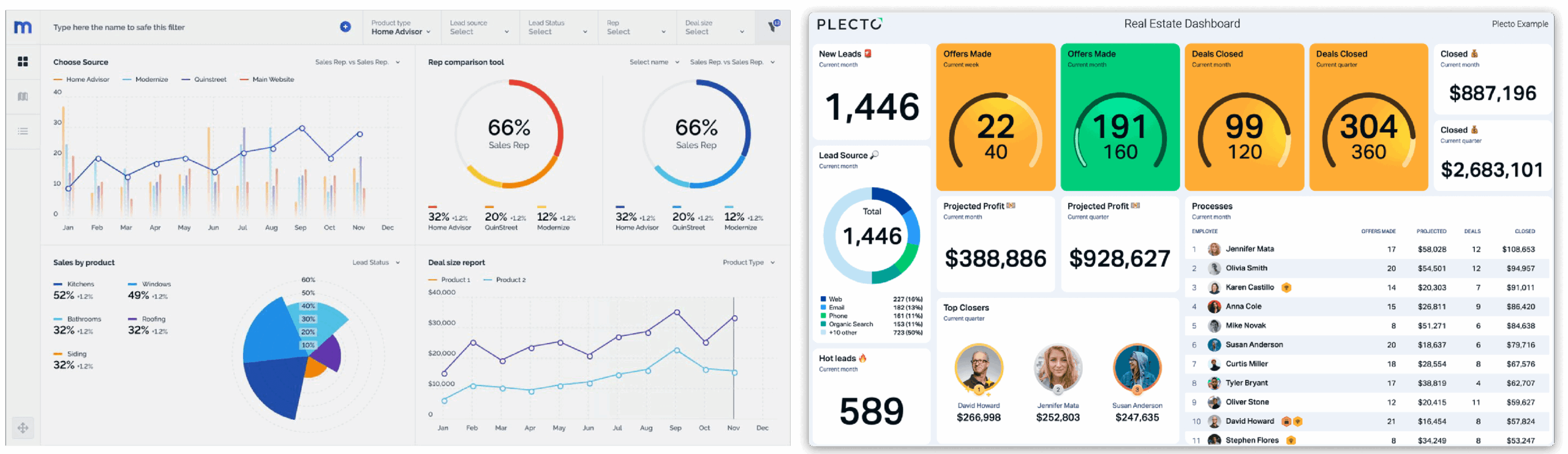 AI analytics tools can help agents:
- Track lead sources
- Monitor calls and inquiries
- Review showings and tours
- Identify conversion trends
Popular AI Analytics Tools Agents Are Exploring
CRM-integrated dashboards
- Use cases: Lead tracking, activity reporting, conversion insights
- Price: Included with many CRM platforms
- Why agents like it: Centralizes data they’re already collecting
👉 HubSpot CRM
👉 Follow Up Boss
Google Analytics with AI-assisted insights https://analytics.google.com/
- Use cases: Website traffic, form submissions, campaign performance
- Price: Free
- Why agents like it: Provides automated insights and trend detection without added cost
👉 Google Analytics
AI analytics tools don’t replace experience — they sharpen it by highlighting patterns agents might otherwise miss.
In a future article in this series, we will dive deeper into AI-powered dashboards and how agents can use data without getting overwhelmed.
5️⃣ Trust & Authenticity Tools
Why credibility matters more as AI grows
As AI-generated content becomes more common, trust becomes a competitive advantage. Agents are increasingly focused on tools that help maintain credibility, transparency, and authenticity.
AI trust-focused tools can help agents:
- Manage reviews and testimonials
- Monitor brand mentions
- Maintain consistency across platforms
- Reinforce credibility in marketing claims
Popular Trust & Reputation Tools Agents Are Exploring
Review management platforms
- Use cases: Collecting, displaying, and responding to reviews
- Price: Free to paid plans
- Why agents like it: Helps maintain a strong, trustworthy online presence
Google Reviews (via Google Business Profile)
👉 https://www.google.com/business/
The most important review platform for local visibility and trust. Agents use Google Business Profiles to collect, manage, and respond to reviews that influence search results and consumer confidence.
Birdeye (Review & Reputation Management)
👉 https://www.birdeye.com/
All-in-one reputation management platform that helps businesses collect reviews, monitor feedback, and maintain consistency across listings and platforms.
Reputation monitoring tools
- Use cases: Tracking mentions, feedback, and sentiment
- Price: Paid plans
- Why agents like it: Keeps agents informed about how their brand is perceived
Podium
👉 https://www.podium.com/
Widely used platform for managing reviews, messaging, and customer interactions, helping businesses maintain credibility and responsiveness.
Brand monitoring tools (general category)
👉 https://www.brand24.com/
Used to monitor brand mentions, sentiment, and feedback across the web and social platforms.
As AI becomes a standard part of real estate marketing, the agents who stand out won’t be the ones using the most tools — they’ll be the ones using them thoughtfully. AI works best when it supports speed, consistency, and insight while leaving room for human judgment, local expertise, and personal connection. In this series, we’ll take a closer look at each AI category to help agents decide where to start, what to avoid, and how to use these tools responsibly in 2026 and beyond.
AI Tools for Real Estate Agents (2026) — Article Series
- Overview: Trending AI Tools for Real Estate Agents in 2026
- Part 1: AI Writing & Messaging Tools for Real Estate Agents
- Part 2: AI Tools for Listing Media: Photos, Staging & Video
- Part 3: AI Lead Response & Follow-Up Automation for Real Estate
- Part 4: AI Operations & Analytics Dashboards for Real Estate Agents
- Part 5: AI Trust, Reviews & Reputation Tools for Real Estate



2 Comments
top up pubg mobile uc global · January 19, 2026 at 5:21 am
Excellent article! Your points are well-articulated and persuasive.
admin · January 19, 2026 at 1:33 pm
Thank you for taking the time to read the article and for the thoughtful feedback — it truly means a lot. We’re glad the points resonated with you and appreciate you joining the conversation.