This article is part of our ongoing series exploring
Trending AI Tools for Real Estate Agents in 2026
.
AI Lead Response & Follow-Up Automation for Real Estate
Speed-to-lead without losing the human touch
In real estate, speed isn’t a luxury — it’s an expectation. Buyers and sellers submit inquiries across listing portals, websites, social platforms, and text messages, often outside traditional business hours. The first response doesn’t just acknowledge interest; it sets the tone for trust, professionalism, and reliability.
For many agents, the challenge isn’t motivation — it’s volume. Managing leads across multiple channels while staying responsive, organized, and consistent can quickly become overwhelming. Missed messages, delayed follow-ups, and forgotten prospects aren’t signs of poor service; they’re signs of limited bandwidth.
AI-powered lead response and follow-up tools help solve this problem by supporting agents where speed and consistency matter most. When used responsibly, these tools ensure inquiries are acknowledged promptly, leads are organized intelligently, and follow-ups happen on time — all without replacing the personal outreach that defines strong client relationships.
This article is part of our AI Tools for Real Estate Agents: A Practical Guide for 2026, which explores how agents are using AI across writing, listing media, lead response, analytics, and reputation management.
🔗 View the full AI Tools for Real Estate Agents (2026) guide
What AI Lead Response Tools Actually Do
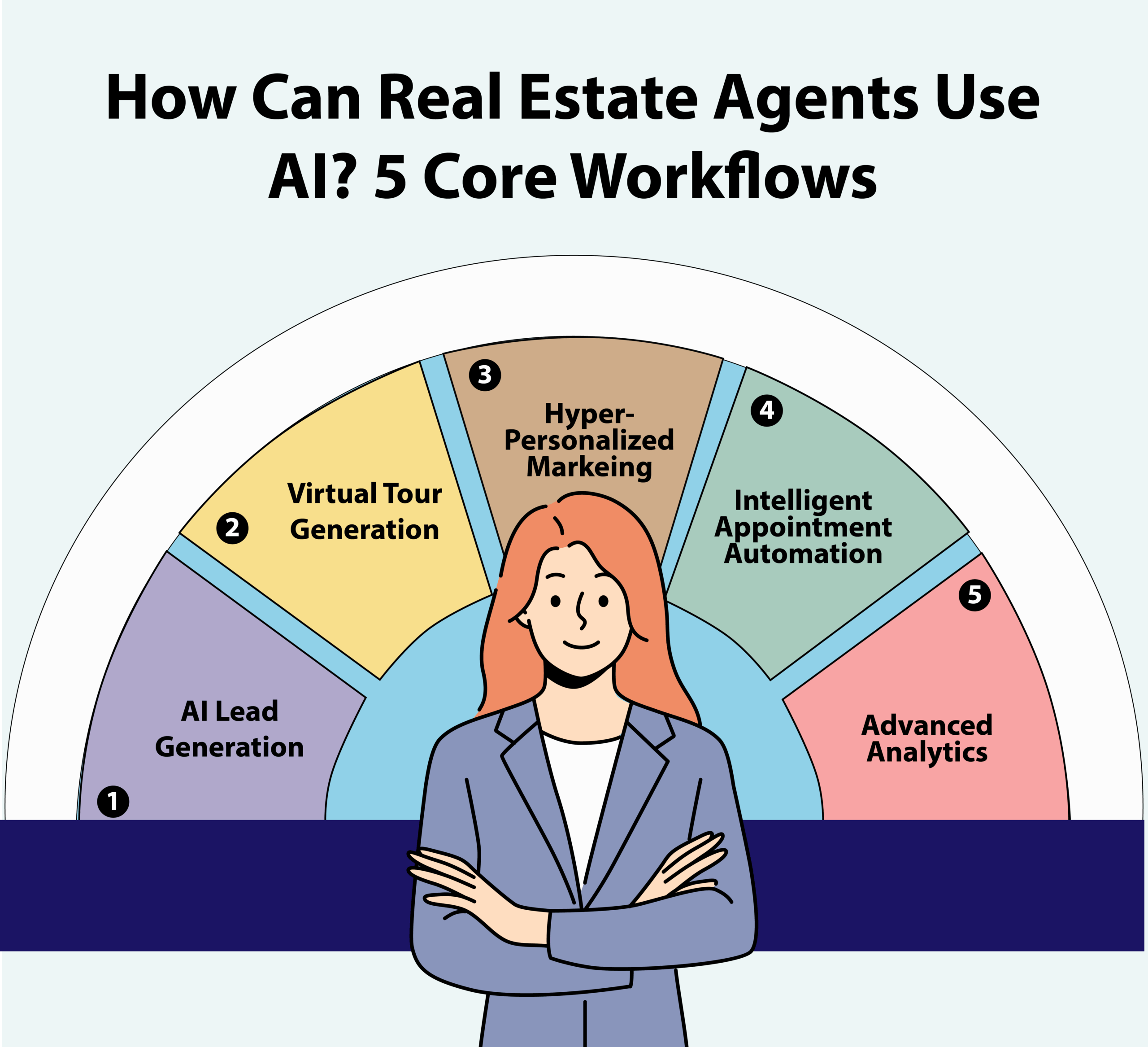
AI-powered workflows help route inquiries, trigger responses, and support timely agent follow-up.
AI lead response tools focus on timing, organization, and consistency — not replacing agent relationships. Their primary role is to ensure that no inquiry goes unanswered and no follow-up is forgotten.
These tools can instantly acknowledge new inquiries through email, text, or website chat, reassuring prospects that their message has been received. Behind the scenes, AI can capture lead details, categorize inquiries, and route them based on predefined rules such as location, urgency, or inquiry type.
Automated reminders also play a key role. By prompting agents to follow up at the right time, AI reduces reliance on memory and manual tracking while improving overall responsiveness.
Where Real Estate Agents Are Using AI Today
Agents typically adopt AI lead response tools in practical, targeted ways — starting with the areas most likely to cause delays or missed opportunities.
Website & After-Hours Inquiries
AI-powered chat tools respond to visitor questions after hours, capture contact information, and notify agents when high-intent leads engage.
Listing Portal Leads
Automated acknowledgements ensure every inquiry receives a prompt response, even during busy days or weekends.
Open House & Event Follow-Ups
AI can trigger thank-you messages, share property details, and remind agents to reconnect personally with attendees.
Longer Sales Cycles
Light-touch follow-ups help keep prospects engaged until they’re ready to move forward.
Popular AI Lead Response Tools Agents Are Exploring

AI tools handle timing and organization while agents focus on personal communication.
Realtor.com AI Tools
- Use cases: Lead follow-up assistance, marketing automation
- Price: Varies by service
- Why agents like it: Built specifically for real estate workflows and familiar lead sources
CRM-Integrated Chatbots
Examples include platforms such as ProProfs Chat and Realty AI.
- Use cases: Website chat, lead capture, automated replies
- Price: Free to paid plans depending on features
- Why agents like it: Improves response speed without constant manual monitoring
Agents new to AI often start by testing one tool on a single task — such as automated inquiry acknowledgements — before expanding into more advanced workflows.
The Balance: Automation Without Losing Trust
Speed matters, but trust matters more. While fast responses set expectations, long-term confidence is built through clarity, consistency, and authentic communication.
AI should support communication, not replace it. Automated acknowledgements handle timing and organization, while personal follow-ups confirm intent, answer questions, and move relationships forward.
Best Practices for Keeping AI Responses Human
- Use automation primarily for first-touch responses
- Clearly set expectations that a real agent will follow up
- Review automated language regularly
- Avoid misleading urgency or availability claims
- Transition quickly to personal communication once a lead engages
How to Start Without Overhauling Everything
Start with one channel — such as website inquiries or listing portal leads — and focus on response time. Automate acknowledgements first, then add follow-up reminders before introducing more complex workflows.
Track basic metrics like response speed and follow-up consistency to measure impact and guide future improvements.
Final Takeaway
Fast responses build confidence long before a conversation begins. Used responsibly, AI-powered lead response tools help agents stay present, professional, and organized — without replacing the personal connection clients expect.
In upcoming articles, we’ll take a closer look at specific AI lead response tools and CRM integrations, including how to configure them without over-automating client communication.
AI Lead Response & Follow-Up Resources
Agents new to AI often start by testing one tool on a single task — such as responding to website inquiries or sending an initial follow-up message — before expanding automation into other workflows.
Examples of services and platforms that offer AI-assisted lead response, follow-up automation, or CRM integration include:
- Realtor.com AI Marketing Tools
— real estate–specific marketing and lead response solutions - ProProfs Chat
— website chat tools that capture leads and trigger automated replies - Realty AI
— AI-powered chat and lead qualification tools designed for real estate use cases - CRM pla
AI Tools for Real Estate Agents — Full Series
- Overview: Trending AI Tools for Real Estate Agents in 2026
- Part 1: AI Writing & Messaging Tools for Real Estate Agents
- Part 2: AI Tools for Listing Media: Photos, Staging & Video
- Part 3: AI Lead Response & Follow-Up Automation for Real Estate
- Part 4: AI Operations & Analytics Dashboards for Real Estate Agents
- Part 5: AI Trust, Reviews & Reputation Tools for Real Estate


0 Comments