Submitting your order or approving your proof is an exciting step. It means the design is ready, the layout has been reviewed, and your project is officially moving forward.
But here’s the part many customers never see:
That approval is not the finish line. It is the handoff point.
Once you click “Order Complete,” your sign moves from the design side of the process into production. That is where artwork becomes a real, physical product — printed, cut, finished, packed, and prepared for pickup, delivery, or shipment.
And like most things worth doing right, there is a process behind it.
From Digital Proof to Finished Sign
Behind every finished sign is a workflow designed to turn approved artwork into a product built for the real world.
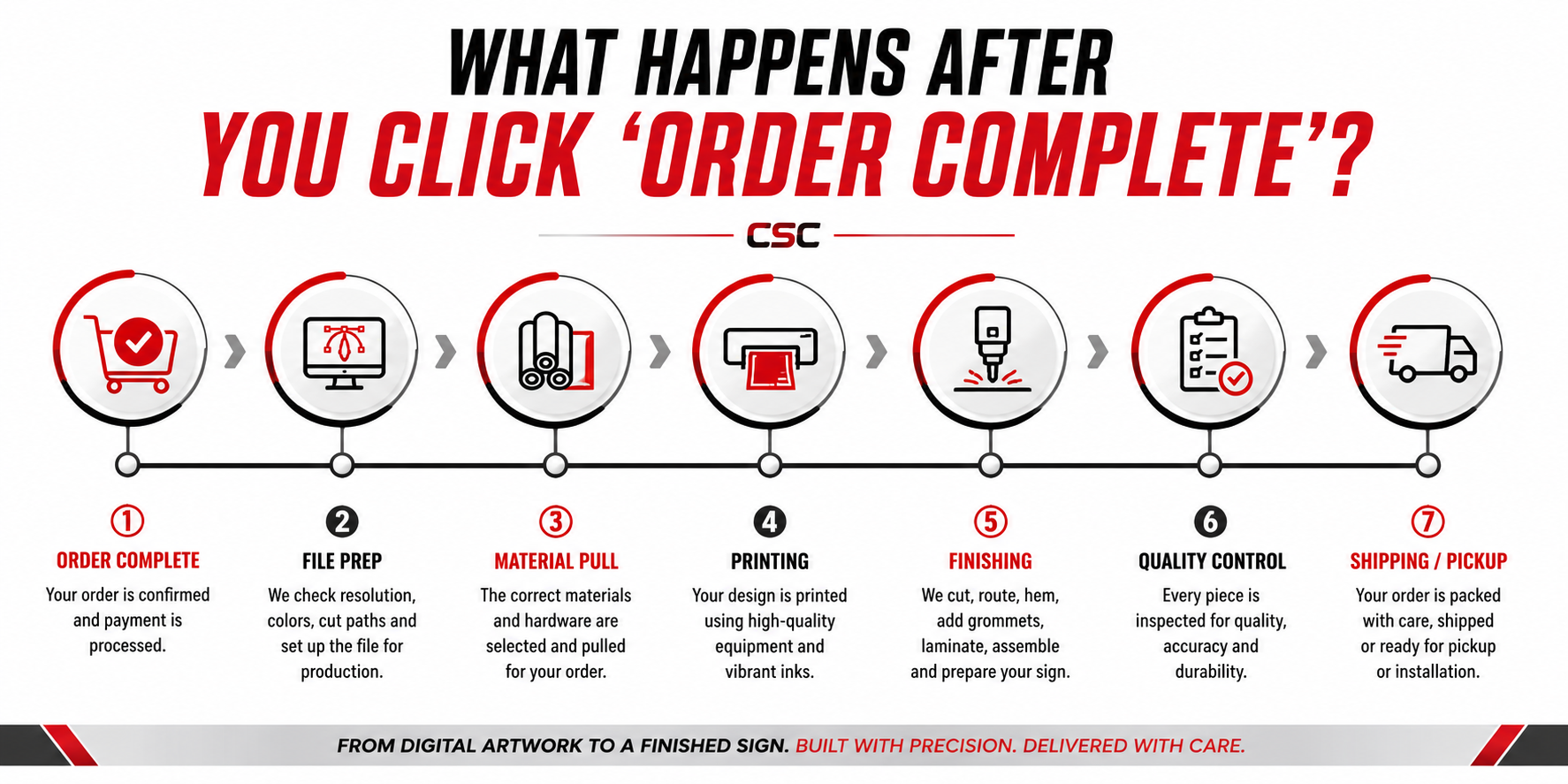
Every approved proof moves through a real production workflow designed to ensure accuracy, durability, and quality before it leaves the building.
What can Delay Production;
Most sign orders move smoothly through production, but certain issues can affect turnaround times if they are not caught early in the process.
Examples:
Low-Resolution Images
Images pulled from screenshots, social media, or websites may appear clear on screen but become blurry or pixelated when enlarged for print production.
Missing Backside Artwork
For double-sided signs, banners, or cards, production can pause if only one side of the artwork has been uploaded or approved.
Approval Delays
Production scheduling begins after final proof approval. Delays in reviewing or approving artwork can affect turnaround timelines, especially during busy seasons.
Specialty Material Backorders
Certain substrates, reflective materials, laminates, or hardware may occasionally have extended lead times depending on supplier availability.
Cut Path Problems
Custom-shaped signs, decals, and routed graphics require precise cut paths. Incorrect or missing cut lines may need correction before production can begin.
Incorrect Sizing
Artwork submitted at the wrong dimensions or proportions may require redesign adjustments to properly fit the selected product size.
Damaged Uploaded Files
Corrupted PDFs, missing fonts, unsupported file formats, or incomplete uploads can prevent artwork from processing correctly in production software.
Most issues can be resolved quickly, but identifying them before printing helps prevent costly mistakes and production delays later in the process.
Proof Approval/Order Submittal Locks In the Design
When you approve a proof or submit your order, you are confirming that the visible details look correct. This includes things like:
- spelling
- phone numbers
- colors
- layout
- logos
- names
- dates
- general placement
This step matters because once production begins, changes become much harder to make. A sign is not like a social media post where a quick edit fixes the issue after publishing. Once material is printed, cut, laminated, drilled, or assembled, changes usually mean starting over.
That is why proof approval is such an important checkpoint.
The File Moves Into Production
After approval, the artwork file is prepared for production. Depending on the product, that may include checking the file size, resolution, bleed, cut lines, color setup, and material requirements. In many ways, this is where the transition from design project to manufactured product officially begins.
This is the stage where the design becomes a production-ready file.
For example, a yard sign, banner, real estate panel, vehicle graphic, or large commercial sign may each require different setup steps before it can move to the printer or finishing equipment.
Good production starts before ink ever hits the material.
Materials Are Matched to the Order
Once the file is ready, the production team confirms what material is needed.
That might be corrugated plastic, PVC, aluminum composite material, banner vinyl, adhesive vinyl, reflective material, or another specialty substrate.
This part may not be flashy, but it matters. The right material affects durability, appearance, installation, and how well the finished sign performs in the real world.
A sign that looks good on screen still has to survive sun, wind, handling, installation, and everyday use.
Printing Comes Next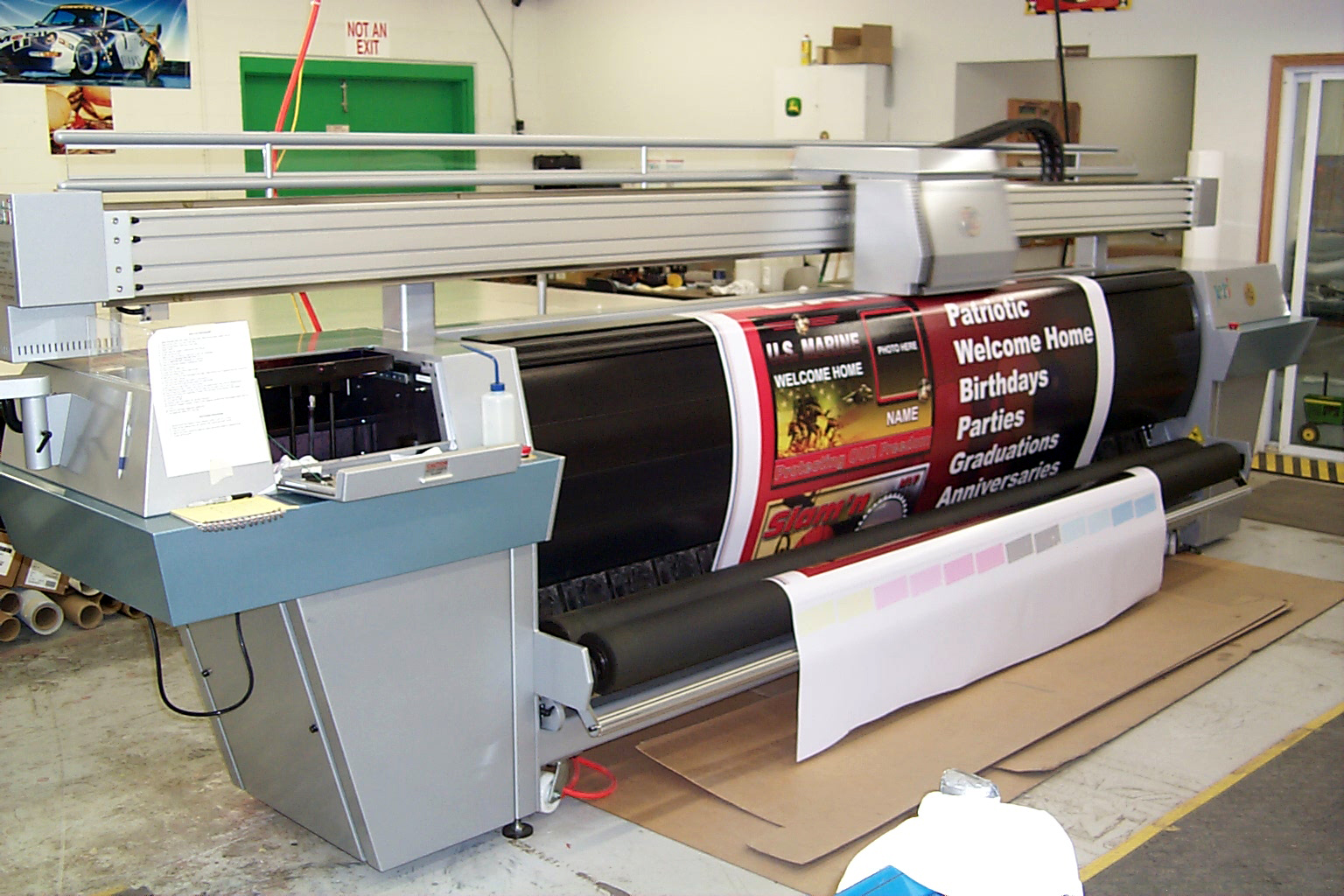
Once the file and material are ready, the project moves to print.
This is where the approved design starts becoming something real. Large-format printers apply the artwork to the selected material using equipment designed for sign production.
Depending on the order, the print may need drying time, curing time, lamination, or additional finishing before it can move forward.
This is also where scheduling matters. Orders move through production based on due dates, material availability, equipment needs, and the type of finishing required.
Then Comes Cutting, Finishing, and Assembly
After printing, many signs still need additional work.
That can include:
- trimming
- routing
- drilling holes
- adding grommets
- laminating
- mounting
- cutting custom shapes
- packaging
- pairing panels with frames, stakes, or hardware
This is the part of the process where details really matter. A beautiful print still has to be finished correctly to be useful.
Quality Control Happens Before It Leaves
Before an order is completed, it should be checked.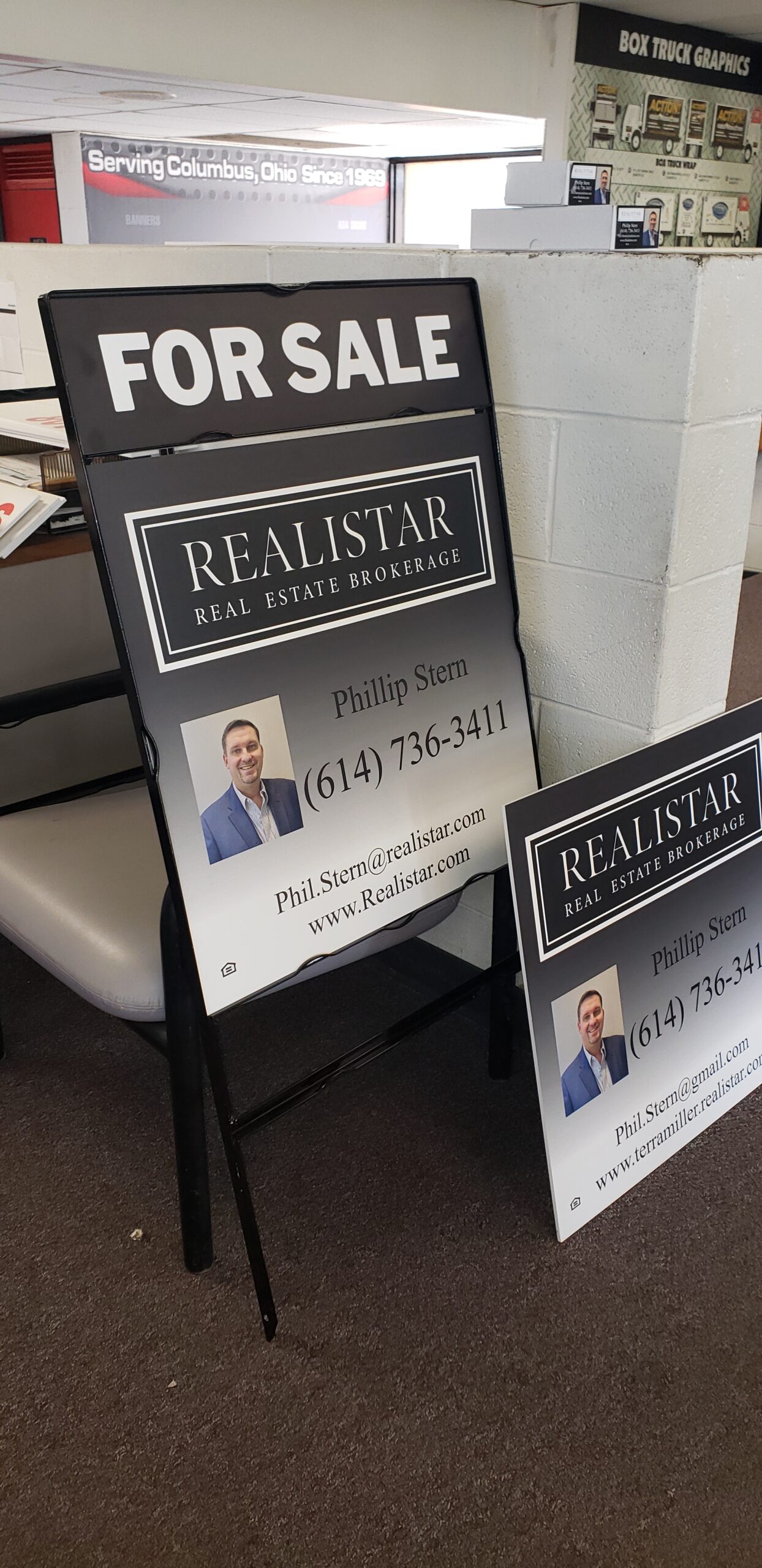
The team looks for print quality, correct sizing, finishing accuracy, material issues, and whether the order matches what was requested.
Nobody wants a sign to leave the building with a preventable problem. Quality control is not glamorous, but it is one of the most important parts of the process.
Measure twice, cut once still holds up. Some old rules earned their place.
Then It Is Packed, Picked Up, Delivered, or Shipped
Once the order is complete, it moves to the final stage.
Depending on the order, that may mean customer pickup, local delivery, installation scheduling, or shipping. Some signs are simple to package. Others require extra protection because of size, finish, material, or hardware.
The goal is simple: get the finished sign where it needs to go in good condition and ready to use.
Why the Process Matters
A proof approval may feel like one small click, but behind that click is a whole production workflow.
Each step helps protect the final result.
At Custom Sign Center, signs are not just pushed through a printer and tossed in a box. They move through a process shaped by decades of sign-making experience, real-world materials, and a team that understands how signs are actually used.
Because when a customer submits their order or approves a proof, they are trusting us with the next step.
And that next step is where the sign becomes real.
0 Comments