Consistency Is About Speed, Not Style
In the real world, signs don’t compete with other signs—they compete with time.
Drivers and pedestrians aren’t analyzing layouts or appreciating design choices. They’re making split-second judgments: What is this? Is it relevant? Can I understand it right now? Consistent sign systems answer those questions faster because the brain has already done the work.
When panel size, layout, and visual hierarchy stay consistent across listings, the viewer doesn’t have to relearn how to read the sign. Recognition kicks in before conscious thought. That speed advantage is the difference between a glance that sticks and one that disappears.
Inconsistent systems introduce friction. Different sizes, shifting layouts, or constantly changing visual priorities force the viewer to slow down—something the street environment simply doesn’t allow. The result isn’t confusion; it’s dismissal.
The impact of consistency doesn’t exist in isolation. It’s part of a broader system grounded in how people visually process information, recognize patterns, and make decisions at speed. We explore those principles in depth in our pillar article on the science behind real estate sign design—breaking down how visibility, hierarchy, repetition, and real-world conditions work together to influence recognition and response.
↑ Back to top
Recognition Happens First—Trust Follows Automatically
Trust doesn’t begin with a phone call or a showing. It begins before awareness.
Buyers and sellers see the same agent’s signage repeatedly—sometimes dozens of times—before they ever need to act. Along a single commute or neighborhood loop, consistent signs quietly stack impressions:
- Same panel shape
- Same layout rhythm
- Same visual balance
That repetition creates familiarity. Familiarity creates comfort. Comfort lowers resistance. By the time someone finally needs an agent, the brand already feels established—even if they can’t articulate why.
This is why recognition builds before trust, and why trust is often already in place when action finally happens.
↑ Back to top
Consistency Doesn’t Mean One-Size-Fits-All
A common mistake is assuming consistency requires using the exact same sign size everywhere. In practice, that’s where performance breaks down.
 Real-world conditions vary:
- Street speed changes
- Viewing distance changes
- Placement options change
A consistent system allows for intentional size variation while maintaining visual cohesion. An 18×24 panel on a residential street and a larger format near higher traffic can still feel like part of the same family—because the layout, hierarchy, and proportions remain familiar.
This is where systems outperform single designs. The brand stays recognizable while the sign adapts to its environment instead of fighting it.
(For a deeper breakdown of how size and placement interact with real-world visibility, we cover that field data in Science Spinoff #1: Choosing the Right Real Estate Sign Size for Visibility.)
↑ Back to top
Repetition Is a Force Multiplier
One well-designed sign looks professional.
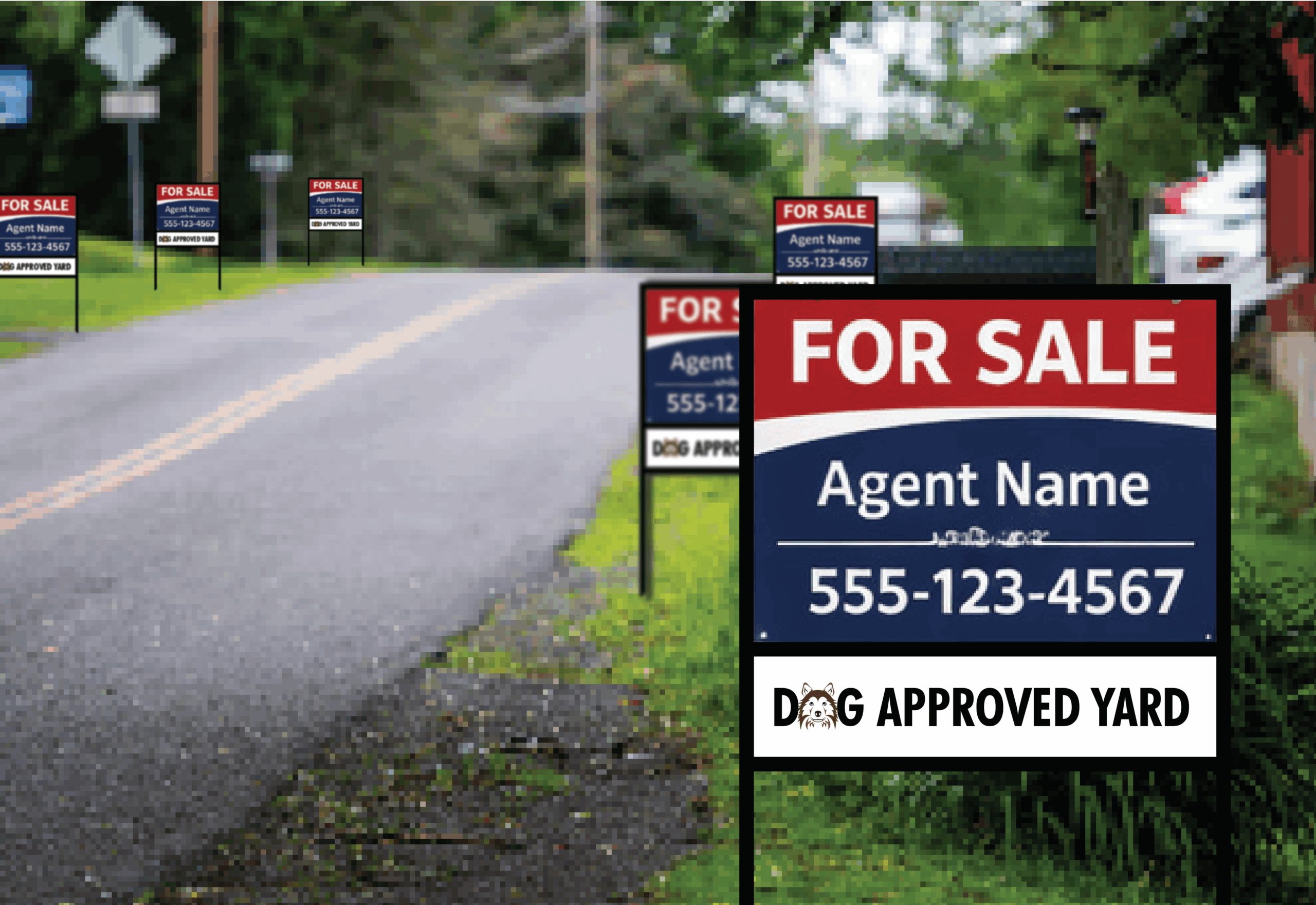
Seeing the same sign design repeatedly in the same area builds familiarity, which plays a key role in trust and long-term brand recognition.
A consistent sign system compounds.
Each new listing reinforces the last:
- Recognition accelerates
- Visual authority increases
- Marketing effort carries forward instead of resetting
Top-producing agents rarely redesign their signs from scratch. They refine spacing, tweak contrast, or modernize materials—but the core system remains intact. That repetition is intentional. It turns individual listings into a cumulative presence.
Instead of starting from zero every time, their signage builds momentum.
↑ Back to top
Systems Perform Better Outdoors—Because Reality Is Messy
Once signs leave the screen and enter the environment, variables take over:
- Sun fade
- Weather exposure
- Material warping
- Ink degradation
Consistent systems make performance issues easier to spot and correct. When materials, thickness, and print methods are standardized, failures stand out quickly—and fixes apply across the system.
This is why agents who treat signage as a system tend to experience fewer surprises in the field. (We explore this in more detail in our article on why some signs last for years—and others don’t make it to closing day.)
Consistency Reduces Effort—and Prevents Errors
Beyond visibility and branding, systems quietly improve operations.
Standardized signage means:
- Faster decisions
- Fewer design revisions
- Cleaner ordering
- Predictable outcomes
Instead of debating every new sign, agents rely on a proven framework. The goal isn’t perfection—it’s repeatable success under real conditions.
That’s what systems deliver.
↑ Back to top
The Real-World Takeaway
Consistency isn’t about looking polished.
It’s about being recognized instantly.
It’s about removing friction from fast environments.
And it’s about letting each sign do more work than the last.
On the street, consistency doesn’t just look professional—it wins attention, trust, and action.
Consistency isn’t a design preference—it’s a performance strategy. In real-world environments where attention is limited and distractions are constant, sign systems that remain predictable, recognizable, and adaptable consistently outperform one-off designs.
The most effective real estate signage doesn’t rely on novelty. It relies on familiarity. Each repeated exposure strengthens recognition, each listing reinforces trust, and each sign contributes to a larger system working quietly in the background.
When signs are designed as part of a cohesive system—accounting for size, placement, materials, and real-world conditions—they stop working as individual pieces and start working together. That’s when visibility compounds, effort decreases, and results become repeatable.
On the street, consistency doesn’t just look professional. It works.

0 Comments