For more than a century, illuminated signs have defined the American commercial landscape. From glowing diners and roadside motels to bold storefront logos in downtown districts, neon once represented the cutting edge of business visibility. Today, however, the industry has evolved. LED illumination has become the new standard for commercial signage, offering durability, efficiency, and performance that modern businesses depend on.
Understanding the difference between neon and LED is not just a matter of nostalgia or aesthetics. It is a strategic decision that affects maintenance budgets, energy consumption, brand consistency, and long-term growth. Whether a company is opening its first location or expanding across multiple markets, choosing the right illumination technology matters. Here is what businesses should know before making that decision.
The Rise of Neon: A Defining Era in Commercial Signage
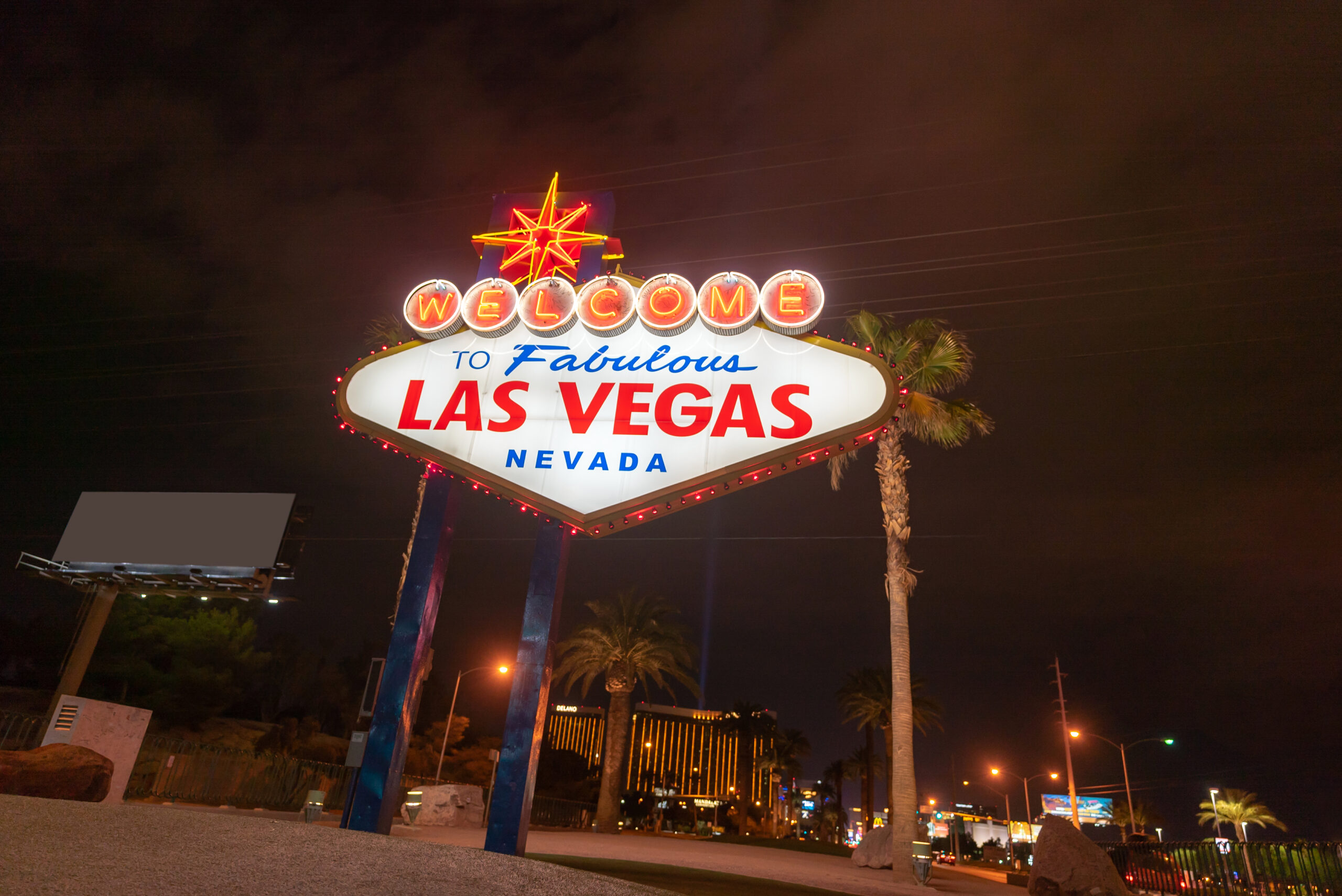
The iconic Las Vegas sign reflects the rise of neon as a dominant force in 20th-century commercial signage.
Neon signage became widely popular in the early 20th century and quickly transformed how businesses communicated after dark. Glass tubes filled with gas were shaped by hand and electrified to create vibrant, eye-catching color. By the 1940s and 1950s, neon was synonymous with commercial visibility. Restaurants, theaters, motels, and retail storefronts relied on it to attract passing traffic and create personality.
Neon was revolutionary for its time. It allowed businesses to extend their visibility beyond daylight hours and introduced a new level of creativity to signage design. For decades, it defined the character of commercial corridors across the country.
That legacy still matters. Neon remains part of signage history and continues to hold artistic and cultural value. However, commercial needs have changed.
↑ Back to top
Where Neon Falls Short for Modern Businesses
While neon played a foundational role in illuminated signage, it presents practical challenges for today’s commercial environments.
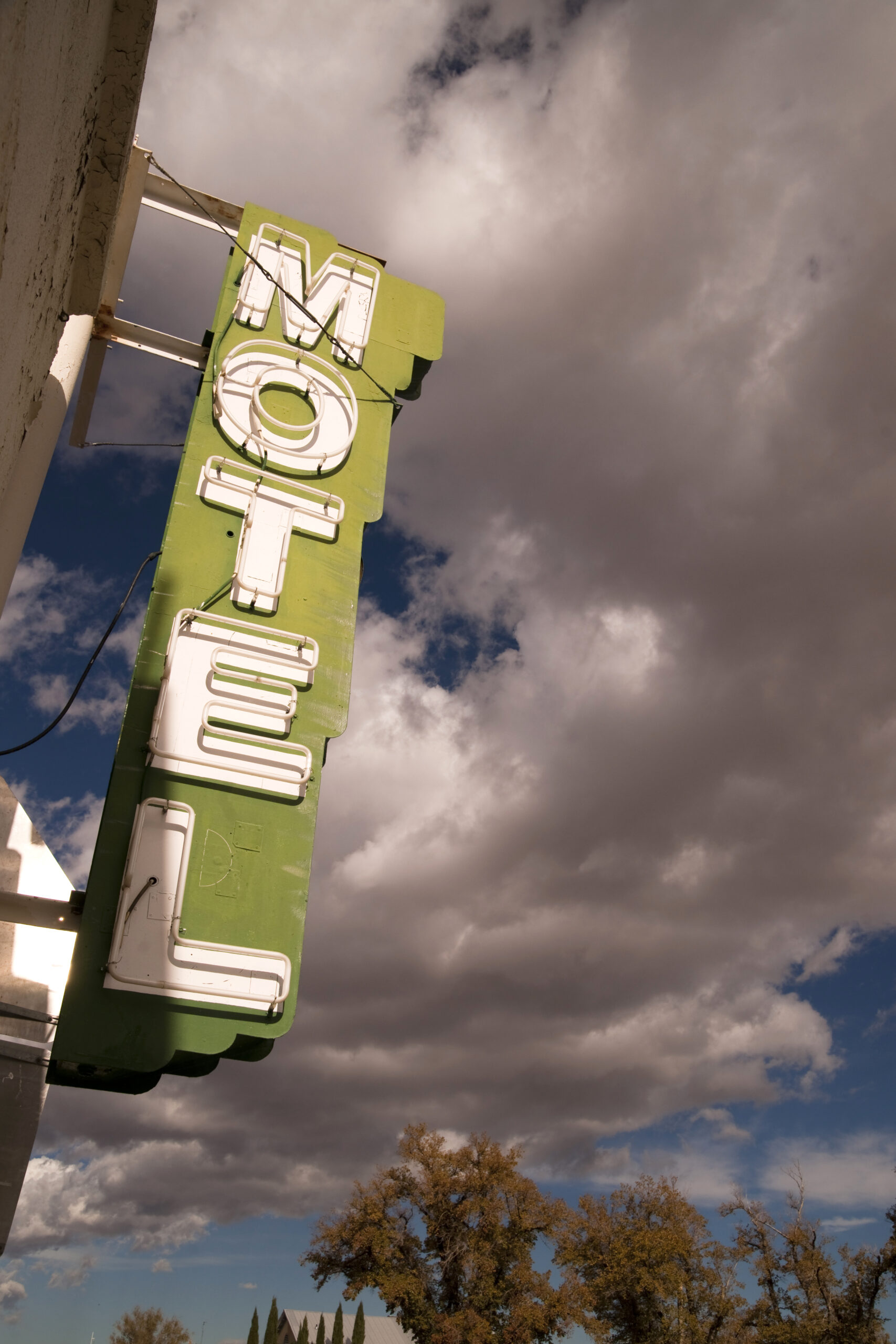
It’s a clear blue sky day on main street in this one motel town
Neon tubing is made of glass, which makes it fragile and vulnerable to breakage during installation or harsh weather conditions. Repairs require skilled technicians and can be time-consuming. Transformers operate at high voltage, which increases complexity and safety considerations. Over time, gas-filled tubes can dim or discolor, affecting brand consistency and visibility.
Energy consumption is another important factor. Neon systems typically use more electricity than modern LED systems, which directly impacts operating costs. For businesses managing multiple locations, even modest efficiency differences can add up significantly.
Maintenance demands, weather exposure, and evolving electrical codes have made neon less practical for large-scale commercial use. As brands expand and seek long-term reliability, these limitations become more pronounced.
↑ Back to top
Why LED Has Become the Commercial Standard
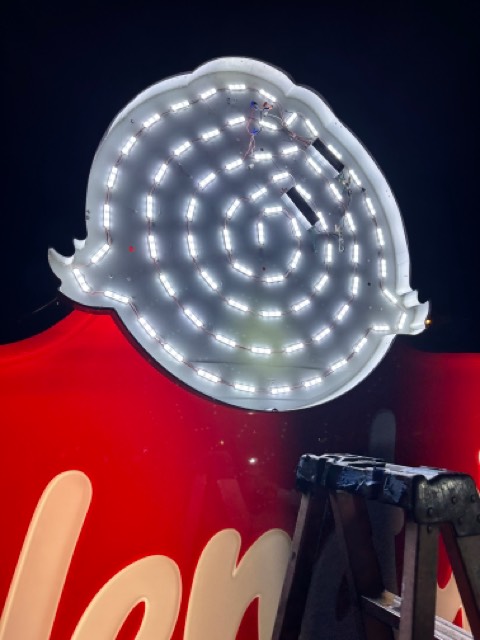
Modern LED modules installed inside a commercial sign cabinet provide efficient, uniform illumination and simplified maintenance.
LED illumination has redefined what businesses expect from their signage. Rather than fragile glass tubes, LED systems use durable, low-voltage components engineered for longevity and consistent performance.
Modern LED channel letters, cabinet signs, and monument signs deliver brighter, more uniform illumination with significantly lower energy consumption. Businesses exploring custom neon or LED signage options should consider how long-term performance and maintenance will affect their investment.
For commercial properties and multi-location brands, LED offers measurable advantages:
- Lower energy usage and operating costs
- Longer lifespan with fewer service calls
- Consistent color output that protects brand standards
- Improved durability in varying climates
- Scalable solutions for regional or national expansion
These benefits are not just technical upgrades. They represent operational stability. When a sign is part of a long-term branding strategy, reliability becomes just as important as appearance.
↑ Back to top
When Neon Still Makes Sense
Although LED has become the preferred choice for most commercial exterior signage, neon still has a place in certain applications. Boutique interiors, hospitality environments, and decorative feature pieces often use neon to create a specific retro or artistic atmosphere.
In those contexts, the character of neon can be a design decision rather than a performance decision. The key is understanding the purpose of the sign and matching the technology to the goal.
What Businesses Should Consider Before Choosing
Selecting between neon and LED should be guided by long-term business strategy rather than short-term visual preference.

Upgrading older lighting systems with LED modules improves brightness, reduces energy use, and extends the life of commercial signage.
Exterior permanent signage requires durability, energy efficiency, and ease of maintenance. Companies planning additional locations benefit from standardized systems that simplify installation and service. Property managers and developers must also consider local electrical codes, permitting requirements, and lifecycle costs.
By evaluating visibility needs, operating budgets, brand consistency goals, and future expansion plans, businesses can make a decision that supports growth rather than creating ongoing complications.
↑ Back to top
Looking Forward: Illuminated Signage Built for the Future
Neon shaped the identity of American commercial signage and earned its place in design history. But as business demands have evolved, so has the technology that supports them. LED illumination now provides the efficiency, durability, and consistency that modern commercial properties require.
For companies investing in permanent signage — whether channel letters, monument signs, or illuminated cabinet systems — the decision extends beyond appearance. It affects maintenance cycles, operational costs, brand integrity, and long-term scalability.
Understanding the strengths of each option allows businesses to move forward with clarity. In today’s commercial environment, LED has become the standard not because it replaces tradition, but because it supports sustainable growth. When signage is built for the future, it becomes more than a visual marker. It becomes an asset that grows alongside the business it represents. If your business is evaluating illuminated signage for a new location or retrofit project, request a custom sign quote to determine the best solution for your property.
↑ Back to top

0 Comments