What Exactly Is a Channel Letter?
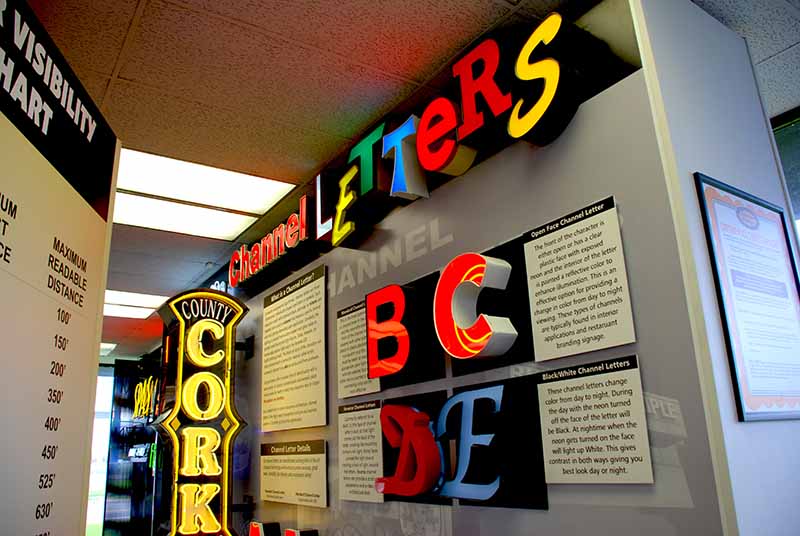
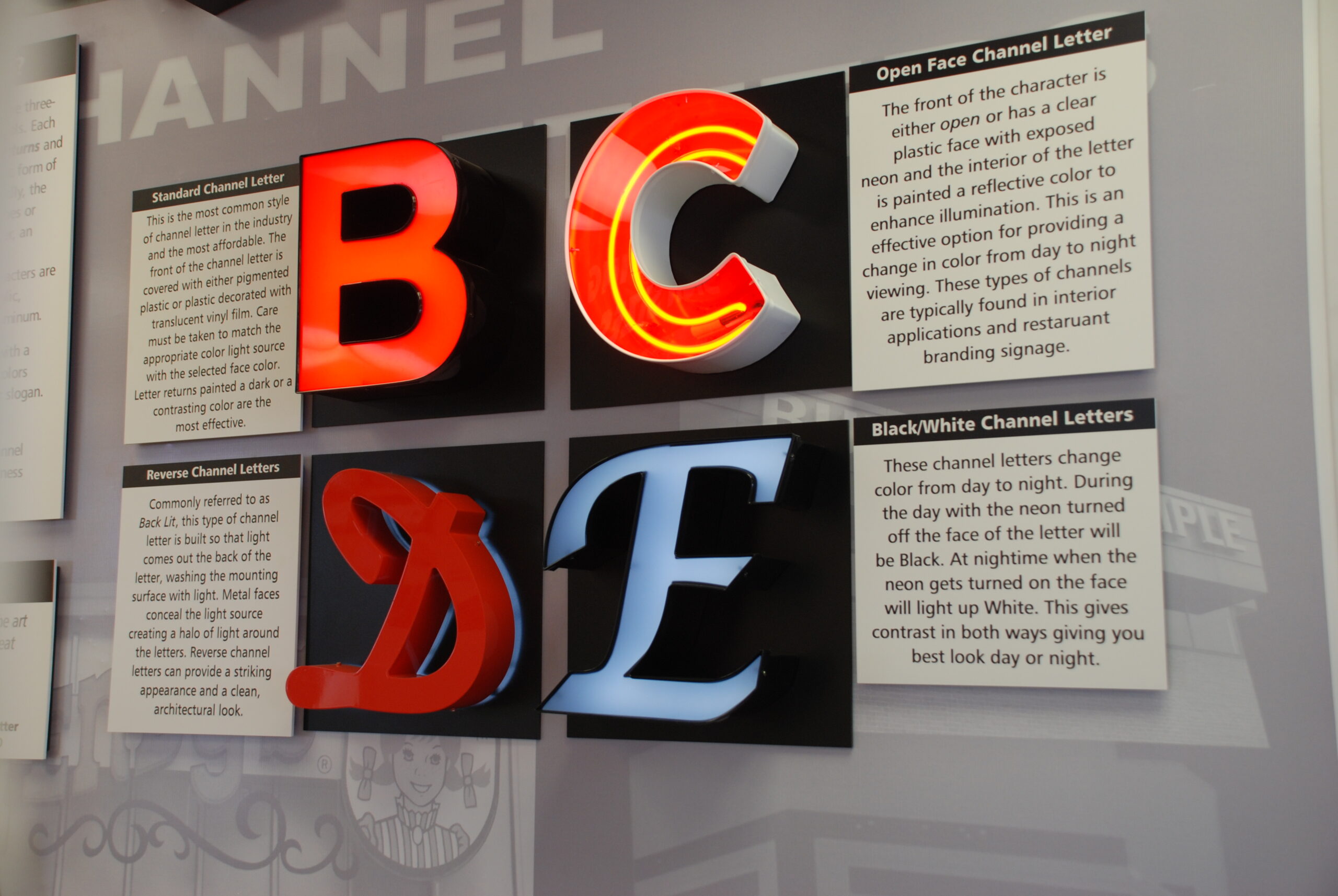
A showroom wall featuring multiple channel letter styles, including standard face-lit, reverse halo-lit, and open-face illuminated letters.
Channel letters are three-dimensional, individually fabricated letters (or logos) mounted to a building façade to identify a business. Unlike flat sign panels, channel letters have depth, structure, and internal lighting. That “built” quality is why they’re used for permanent storefront branding—from restaurants and retail to medical, offices, and corporate facilities.
Each character is typically constructed with an aluminum body, a plastic (acrylic) face, and an internal light source. When installed correctly, channel letters provide daytime presence and nighttime visibility in one clean, professional package.
What Are Channel Letters Made Of?
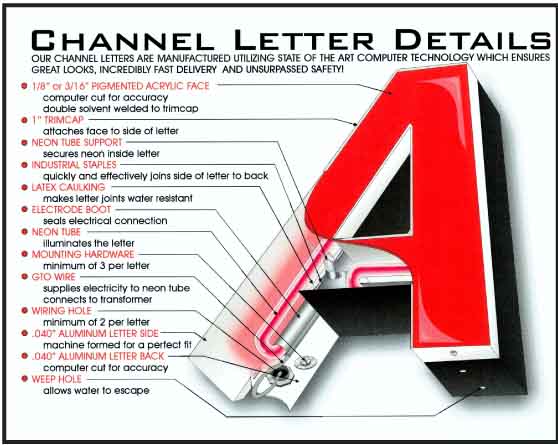
A labeled diagram illustrating the internal components of a fabricated channel letter, including aluminum sides, acrylic face, LED lighting, wiring, and mounting hardware.
Channel letters are engineered products, not just decorative pieces. While specs vary by project, most letters
share a consistent anatomy: a formed metal body for strength, a face that diffuses light, and internal lighting
designed for long-term performance outdoors.
A typical build includes an acrylic face (often pigmented), aluminum returns (the “sides” that create depth),
an aluminum back, and a lighting system mounted inside the can. Trim caps, seals, and wiring complete the system
so the letter can handle weather, vibration, and daily on/off cycles.
LED vs. Neon Channel Letters
Modern channel letters are most commonly illuminated with LEDs, but neon still shows up in specialty builds
and certain aesthetic-driven applications. The key difference is how the letter is lit and what that means for
efficiency, maintenance, and long-term ownership.
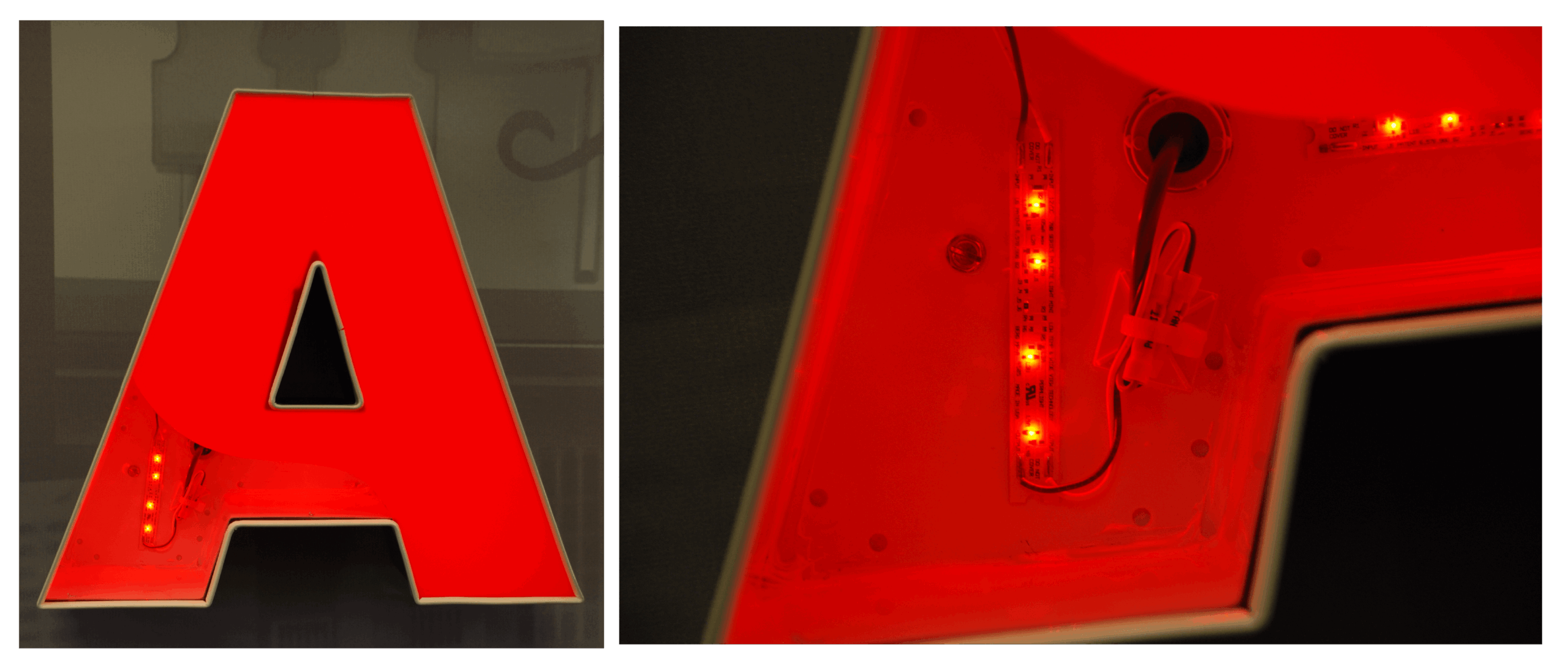
LEDs are widely used because they’re efficient, consistent, and easier to service over time. Neon has a classic,
unmistakable glow, but it typically requires higher voltage components and more specialized maintenance. In most
commercial environments, LEDs are the practical choice—especially for businesses that want reliable performance
with fewer service calls.
Flush Mount vs. Raceway Mount
How channel letters mount matters almost as much as how they look. The mount method affects installation time,
wall penetrations, service access, and the overall appearance on the building.
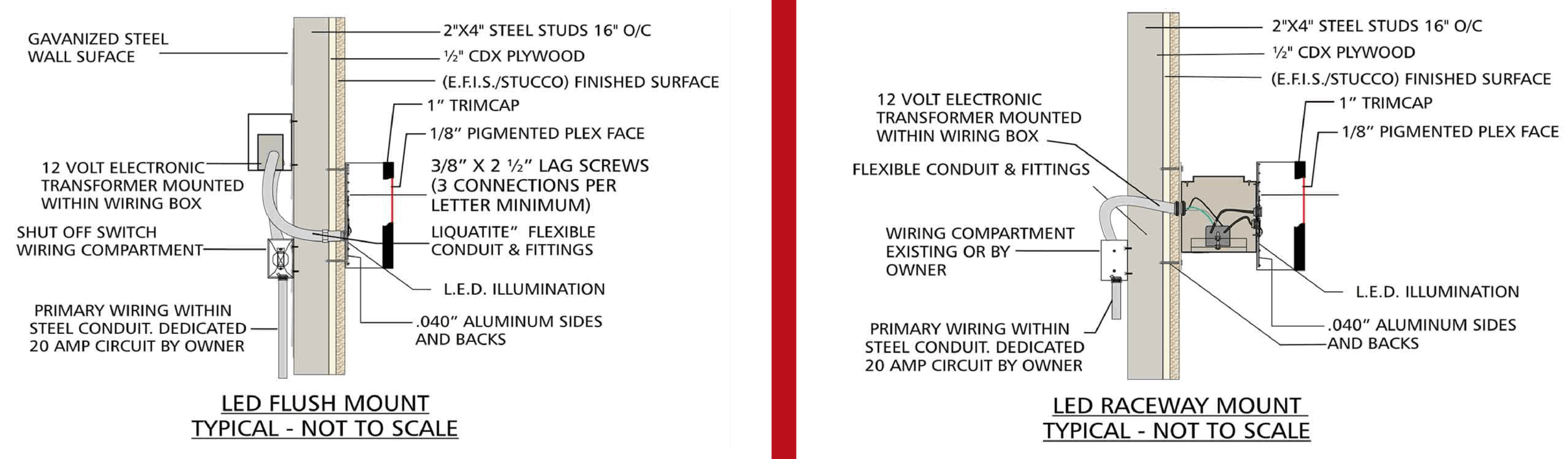
Side-by-side installation diagrams showing flush-mounted and raceway-mounted LED channel letters.
With a flush mount, each letter is mounted directly to the wall. This delivers a cleaner, more
“built-in” look, but it can require multiple wall penetrations for wiring and careful planning around the façade.
It’s a great option when aesthetics are the top priority.
With a raceway mount, letters attach to a metal raceway (a long, enclosed box) that routes wiring
and reduces the number of wall penetrations. It’s often faster to install and easier to service. Raceways can be
painted to match the building to keep the look clean.
Every building is different. Electrical access, façade material, and mounting method all impact pricing. If you’d like a project-specific estimate, request a sign quote here.
↑ Back to top
Types of Channel Letters You’ll See on Modern Buildings
Completed LED channel letter signage mounted to a commercial building exterior.
“Channel letters” is an umbrella term. There are several common styles, and each one creates a different look
at night, different contrast in daylight, and different impact from the road.
The most common styles include standard (face-lit) letters, reverse (halo-lit) letters,
open-face letters, and specialty variations designed to change appearance from day to night.
The best option depends on your brand, building surface, viewing distance, and how the sign needs to read after dark.
If you’re exploring custom channel letter signage for your building, you can view our available options and specifications here.
How Channel Letters Are Fabricated
Good channel letters don’t happen by accident. Each letter is built to specification, assembled with attention to
fit and finish, wired for safe operation, and tested before it ever goes on a wall.
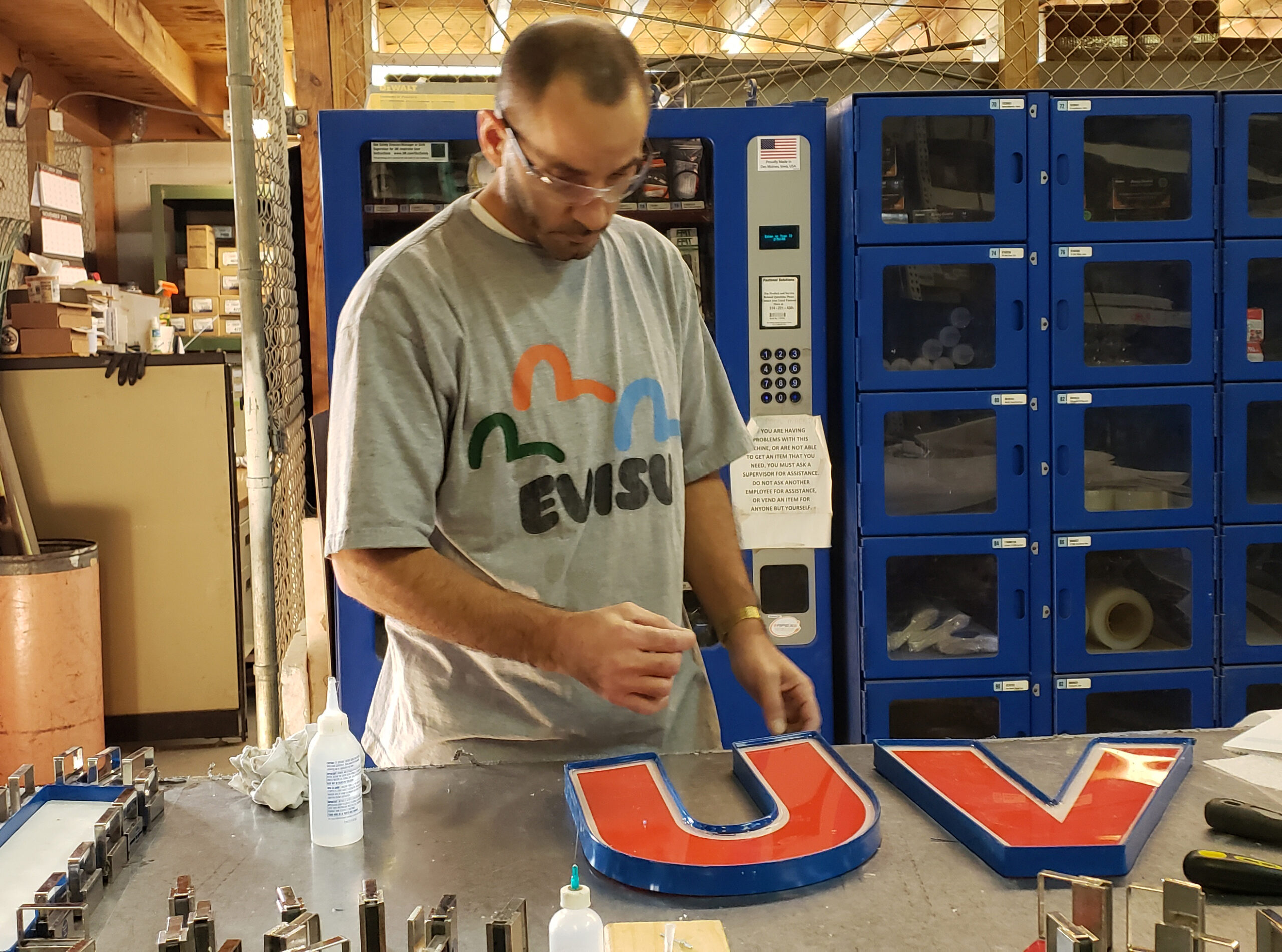
In practical terms, fabrication typically includes cutting faces and backs, forming aluminum returns, assembling
the letter can, installing the lighting system, routing wiring cleanly, and sealing the build for outdoor use.
This is where quality shows up later—especially in even illumination, consistent color, and long-term reliability.
Installation and Electrical Requirements
Channel letters are a permanent building sign, which means installation involves more than adhesive and hope.
Depending on the site, you may need permitting, lift access, and a planned electrical connection.
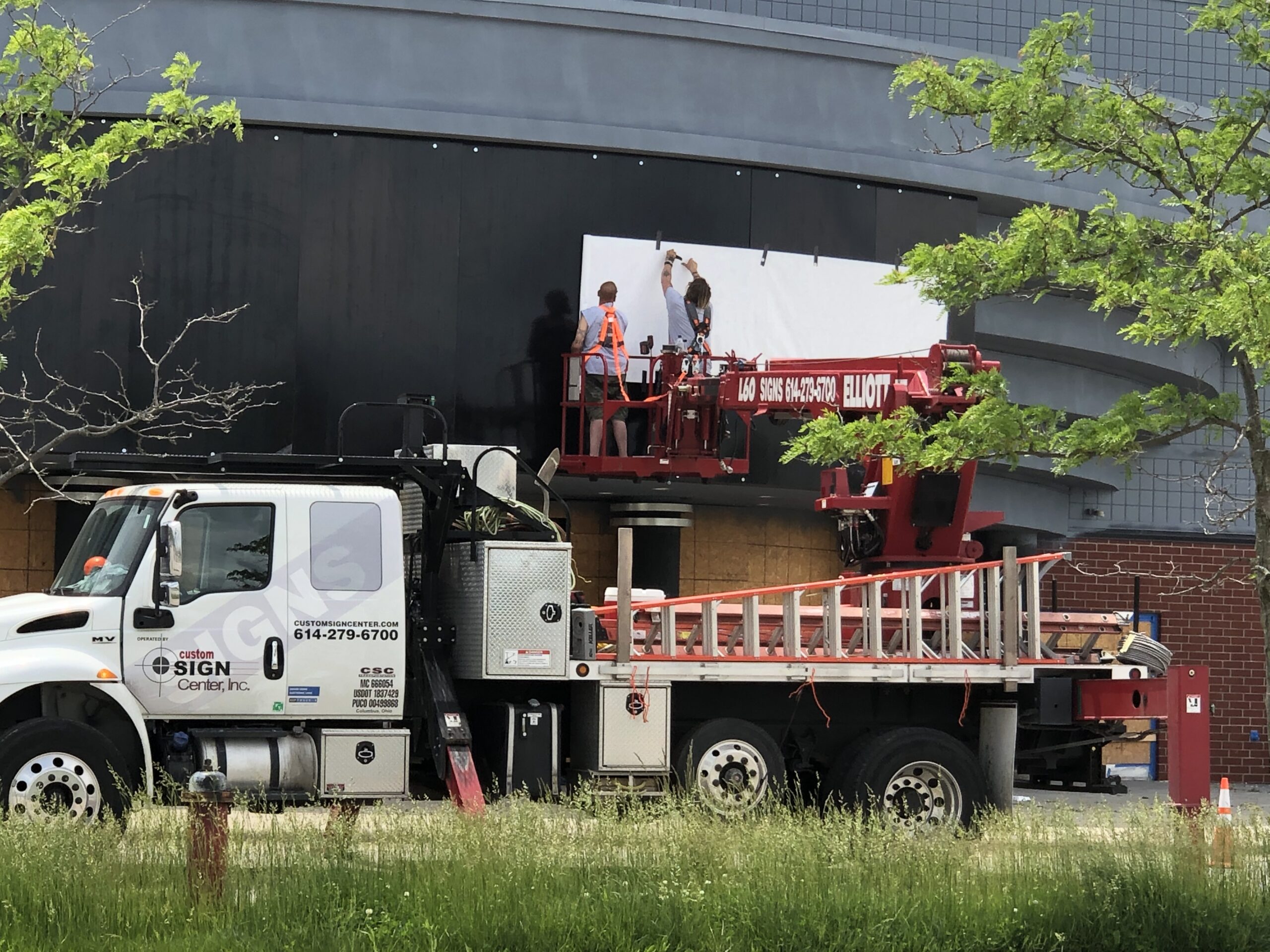 A properly planned install accounts for the wall surface, attachment points, weather exposure, and service access.
Electrical requirements vary by build, but most LED channel letters run on low voltage power supplied by a transformer, with primary wiring completed to code. Done right, the result is clean, dependable visibility with minimal ongoing effort.
Why Businesses Choose Channel Letters
Channel letters are one of the most effective “set it and forget it” signage choices for brick-and-mortar brands.
They’re readable, durable, and built to represent a business well during the day and after dark.
The payoff is simple: when someone drives by, channel letters make it immediately clear who you are, where you are, and that you’re established enough to invest in professional signage. That signal matters—especially in competitive retail corridors and high-traffic commercial zones.
Conclusion
Channel letters are modern building signage in its most recognizable form: dimensional, illuminated, and engineered
for long-term visibility. Whether you choose flush mount for a clean architectural look or a raceway mount for simplified installation, the goal is the same—make your location unmistakable at a glance, day or night.
The best channel letter projects start with smart planning: the right style, the right illumination, the right mount
method, and a fabrication process that doesn’t cut corners. When those pieces are aligned, you get a sign system that performs for years, reinforces brand credibility, and keeps your storefront doing its job long after the install crew
packs up and rolls out.
If you’re planning a storefront upgrade or new construction project, our team can design, fabricate, and install custom channel letters tailored to your building. Start with a quote request here or explore your options on our channel letter page.
↑ Back to top
0 Comments