Most people see a finished monument sign or illuminated storefront and assume it simply “went up.”
It didn’t.
Before steel is welded or vinyl is printed, there’s zoning research, engineering drawings, load calculations, electrical coordination, fabrication planning, and inspection approvals.
This article walks through the real process — the one business owners rarely see.
If you’re exploring different commercial sign structures, materials, or formats, review our guide to commercial signage types before beginning the permitting process.
Zoning & Local Code Research
Before a commercial sign ever goes into production, the first stop isn’t the shop floor.
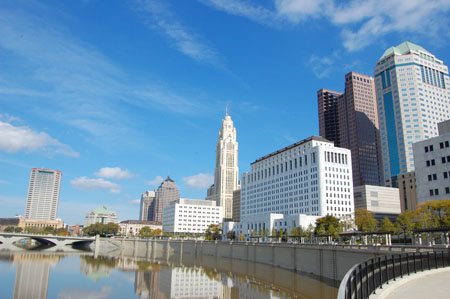
Downtown Columbus, Ohio — where commercial development, zoning regulations, and permitting shape sign installation projects.
It’s zoning.
In Columbus, sign regulations fall under the City of Columbus Zoning Code (Title 33), and they are specific. What works on one corridor may not be permitted a few blocks away.
Here’s what business owners need to understand.
In Columbus, allowable sign area typically depends on:
-
Zoning district (C2, C3, UGN, etc.)
-
Linear frontage of the building
-
Type of sign (wall, ground, pole, projecting)
For example, wall signs are often calculated based on the width of the tenant’s frontage. Ground and monument signs are regulated differently and may be restricted to one per parcel in many districts.
Translation:
You don’t pick a size first and “hope it works.” You calculate what’s allowed.
Height Limitations
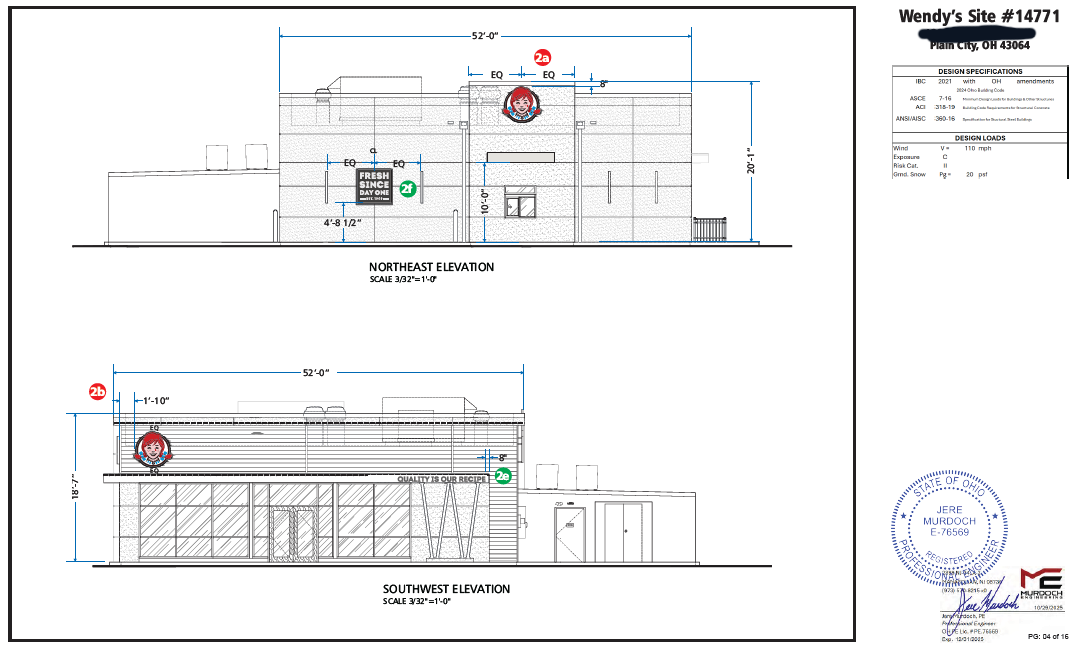
Elevation drawing used to calculate allowable graphic area, height compliance, and sign placement for commercial signage in Columbus.
Height is heavily regulated, especially for ground and pole signs.
In many Columbus commercial districts:
-
Monument signs may be limited to a specific height range (often around 6–8 feet, depending on district).
-
Pole signs are far more restricted and often prohibited in certain zoning classifications.
-
Additional limits apply near residential districts.
If your property is near residential zoning, expect tighter scrutiny.
And yes — variances are possible, but they add time and hearings.
Illumination in Columbus must comply with:
-
Brightness standards
-
Shielding requirements
-
Digital sign regulations
-
Prohibited flashing or animated elements in many districts
Electronic message centers (EMCs) are particularly regulated. Not every corridor allows them, and where they are permitted, they often require additional approvals.
Brightness levels can also be reviewed during permitting.
It’s not just about looking good at night.
It’s about meeting compliance standards.
Setback Requirements
Setbacks determine how close a sign can be placed to:
-
The public right-of-way
-
Property lines
-
Intersections
Columbus enforces minimum distances from intersections for safety visibility.
For ground signs, placement isn’t just aesthetic — it’s regulated for traffic safety and pedestrian flow.
That beautiful monument sign might need to move a few feet on paper before it ever moves dirt.
If your business is located in:
-
German Village
-
Short North
-
Victorian Village
-
Or any designated historic district
You’re dealing with an added layer of review.
Historic districts often require:
-
Design review board approval
-
Material restrictions
-
Illumination limitations
-
Dimensional constraints
And that process can involve presentation before a commission.
It’s not a rubber stamp.
Why This Matters
The biggest delays in commercial signage rarely happen in fabrication.
They happen before approval.
Zoning research upfront prevents:
-
Redesign fees
-
Permit rejections
-
Production delays
-
Installation rescheduling
Experience navigating Columbus regulations saves weeks — sometimes months — in a project timeline.
And in commercial real estate, time is money.
Engineering & Drawings
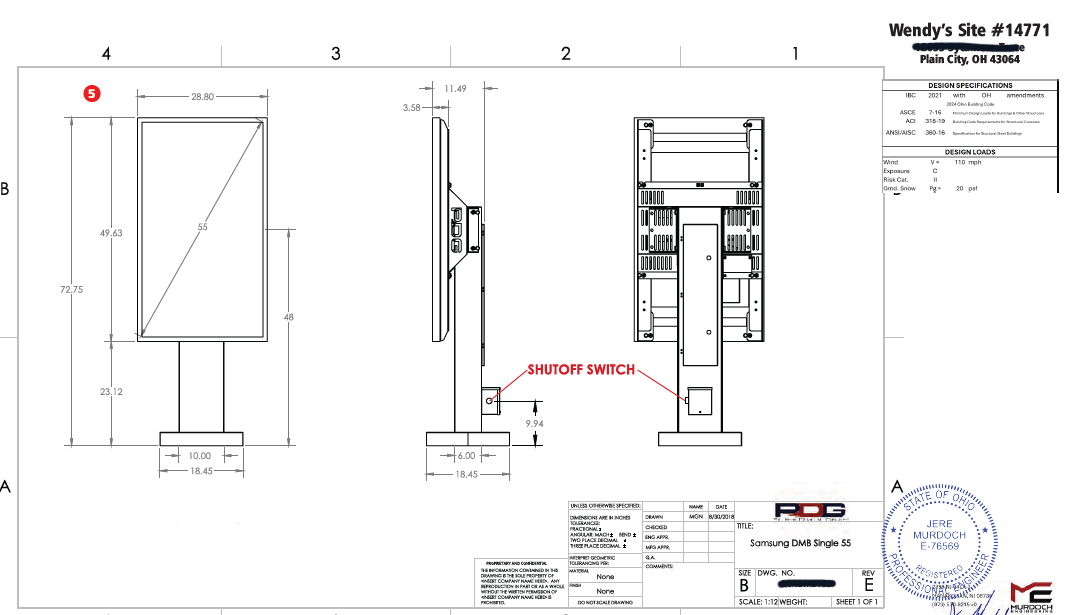
Stamped engineering drawing detailing structural dimensions, wind load calculations, and electrical components for a commercial sign installation.
Once zoning parameters are confirmed, the project moves into technical development. This is where the sign shifts from concept to engineered structure.
A commercial sign isn’t artwork mounted outdoors. It’s a structural element that must withstand environmental stress, meet electrical standards, and pass inspection.
Here’s what happens behind the scenes.
For ground and monument signs in Columbus, structural integrity is critical. Engineering drawings often include:
-
Load-bearing analysis
-
Anchor specifications
-
Reinforcement design
-
Mounting hardware details
If the sign exceeds certain size thresholds or includes internal steel framing, stamped engineering drawings may be required for permit submission.
This isn’t optional. It’s compliance.
Wind Load Ratings
Ohio weather is not gentle. Wind load calculations determine how much force a sign must withstand based on:
-
Height
-
Surface area
-
Geographic exposure category
-
Mounting method
Monument signs, pole signs, and large cabinet signs must meet regional wind load standards. Improper calculation can lead to structural failure—or failed inspection.
In engineered signage, wind isn’t a guess. It’s math.
Footings are determined by:
-
Soil conditions
-
Frost depth
-
Sign height and weight
-
Wind load calculations
In Central Ohio, frost depth matters. Footings must extend below the frost line to prevent seasonal shifting or heaving.
What looks like a simple monument sign often rests on a substantial engineered base below grade.
The visible portion is only half the structure.
Electrical Specifications
Illuminated signs require coordinated electrical planning. Engineering drawings may include:
-
Voltage requirements
-
Disconnect locations
-
Conduit routing
-
Internal wiring schematics
-
LED module layouts
Electrical components must comply with code and often require inspection before activation.
Proper documentation ensures installers and electricians work from the same technical plan—not assumptions.
Site plans illustrate:
-
Exact sign placement
-
Setback measurements
-
Distance from property lines
-
Proximity to roadways and intersections
-
Relationship to existing structures
These drawings are typically submitted with permit applications and must align with zoning requirements reviewed in Step 1.
Precision here prevents costly relocation later.
Landlord & Property Management Approvals
In multi-tenant centers, retail plazas, and office complexes, landlord approval is often required before permitting even begins.
This may include:
-
Brand compliance review
-
Color and material approval
-
Illumination restrictions
-
Uniform sign band standards
Experienced sign companies coordinate directly with property managers to prevent design revisions after engineering is complete.
Skipping this step can send a project back to redesign—wasting time and money.
In-House Production Matters
When metal frames are built in-house and fabrication is managed internally, the engineering drawings align directly with production capabilities.
There’s no disconnect between the design file and the welding table.
That alignment reduces:
-
Miscommunication
-
Structural errors
-
Fabrication delays
-
Rework costs
Engineering isn’t just paperwork. It’s the bridge between approval and build.
And when done properly, it protects the investment long before installation day.
Permit Submission & Approval
Once engineering drawings and site plans are finalized, the project moves into formal permit submission.
In Columbus, this typically involves submitting documentation through the City’s Building and Zoning Services Department. Depending on the sign type, additional review departments may be involved. A commercial sign permit in Columbus is not a one-page request. It requires detailed zoning calculations, structural references, contractor licensing, and documented site measurements.
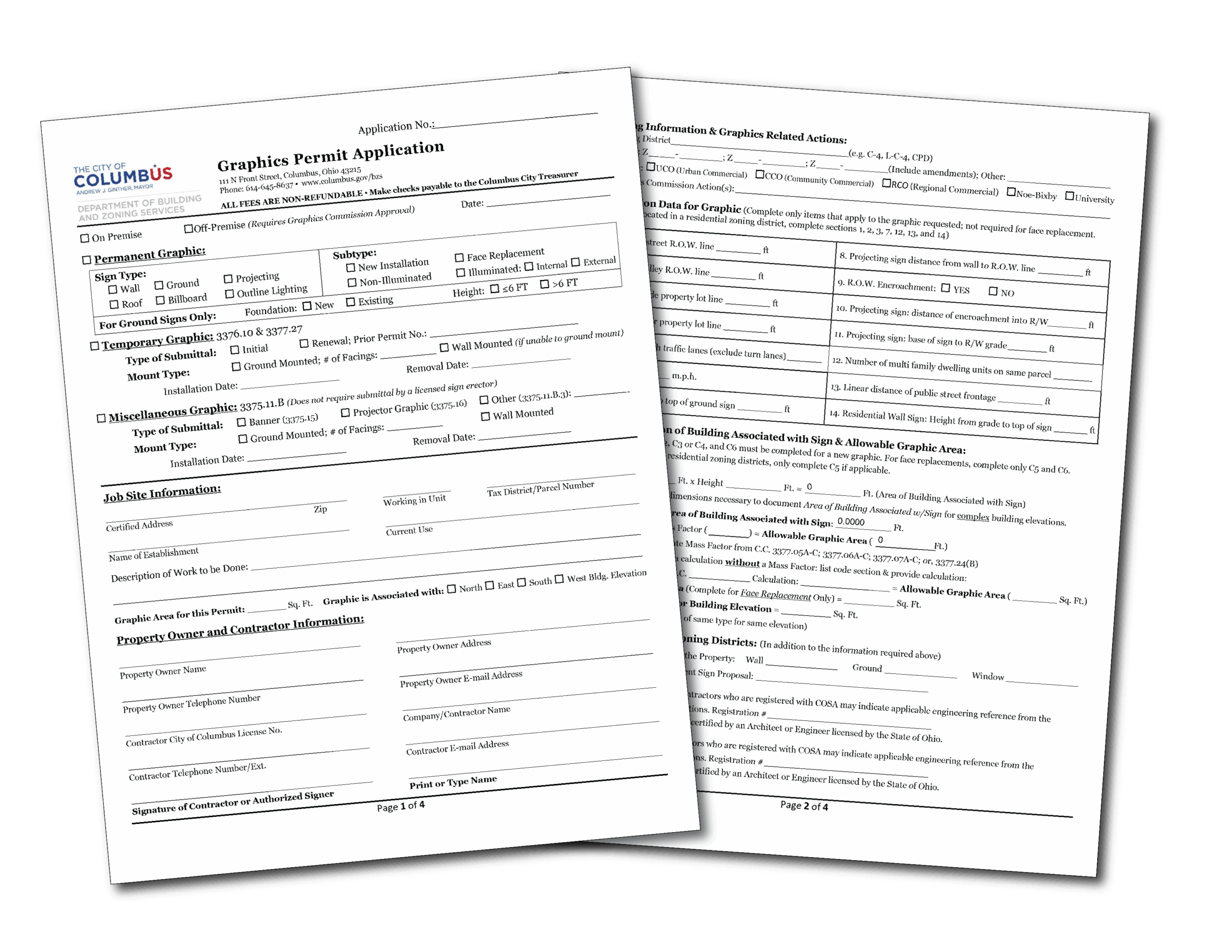
Excerpt from the City of Columbus Graphics Permit Application required for commercial signage approval.
The Graphics Permit Application requires classification of sign type, graphic area calculations, setback documentation, zoning district identification, and in some cases, engineered drawings stamped by a licensed professional.
Submitting incomplete or inaccurate information is one of the most common causes of permit delays.
This stage is procedural—but it’s rarely fast.
A complete permit package may include:
-
Engineered drawings (if required)
-
Structural details
-
Electrical schematics
-
Site plans with setbacks identified
-
Zoning clearance documentation
-
Contractor information
-
Property owner authorization
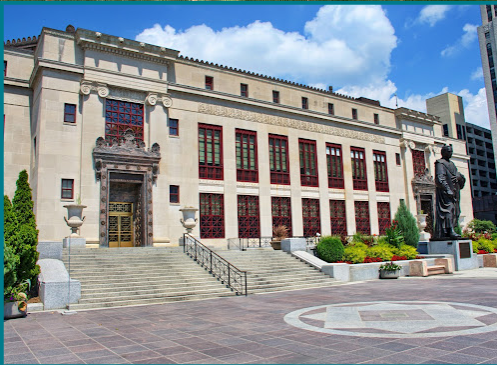
City of Columbus offices where commercial sign permits and zoning approvals are reviewed.
Incomplete applications are the fastest way to trigger delays.
Municipal reviewers look for precision. Missing measurements, unclear structural details, or incorrect zoning references can send the project back for revisions.
Review Timelines in Columbus
Permit review timelines vary based on:
-
Sign type (wall vs. ground vs. illuminated)
-
Engineering complexity
-
Historic district review requirements
-
Current city workload
Simple wall signs may move through more quickly.
Monument signs, pole signs, or illuminated cabinet signs often require multiple layers of review and may take several weeks.
If a variance is required, the timeline can extend significantly due to public hearing schedules.
This is why early zoning research matters.
Revisions & Resubmissions
It’s common for reviewers to request clarifications.
These may include:
-
Adjusted height measurements
-
Additional structural reinforcement details
-
Modified illumination specifications
-
Relocated placement to meet setback requirements
Each revision adds time.
Experienced permit coordinators anticipate common review comments and structure applications to reduce back-and-forth.
Preparation shortens the cycle.
Inspections & Final Sign-Off
Approval of the permit is not always the final step.
For illuminated or structural signs, inspections may be required:
-
Footing inspection prior to concrete pour
-
Electrical inspection before activation
-
Final structural inspection after installation
These inspections ensure the installed sign matches approved drawings.
Deviation from approved plans can result in corrective action or reinspection.
Compliance continues through installation—not just submission.
Why This Stage Is Often the Longest
The production team can fabricate efficiently.
Install crews can schedule within days.
But municipal approval moves at municipal speed.
The most successful commercial signage projects build permit timelines into their launch planning.
When businesses plan signage alongside construction or tenant build-out—not after—it reduces pressure and prevents rushed decisions.
Experience Changes the Outcome
Familiarity with Columbus processes matters.
Knowing which sign types trigger engineering review.
Understanding how historic districts evaluate materials.
Anticipating common revision requests.
That knowledge doesn’t eliminate permitting—but it makes it predictable.
And predictability is valuable in commercial development.
Fabrication Begins
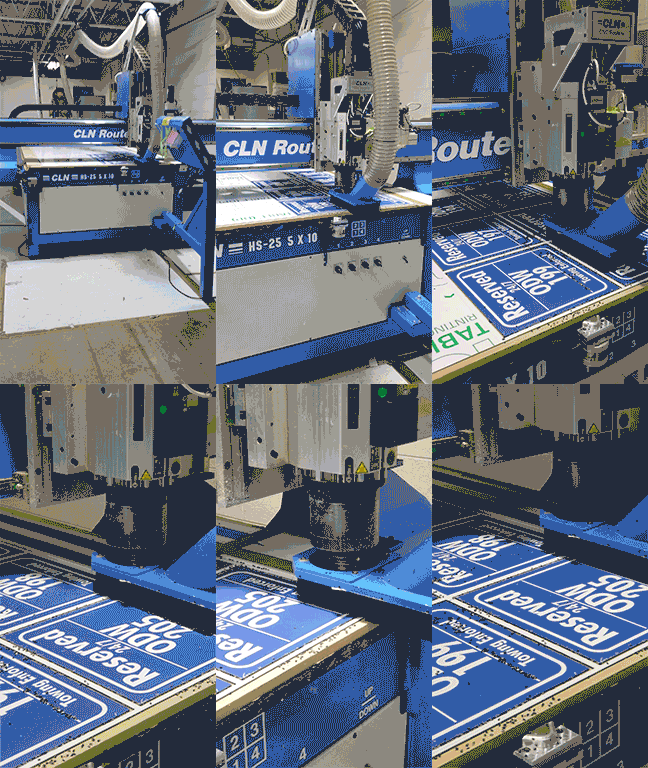
Direct-to-substrate printing on 3mm metal panel during commercial sign fabrication.
Once permits are approved, fabrication moves from digital drawings to physical construction.
This is where coordination between engineering and production becomes critical. Every measurement, weld, anchor point, and electrical component must match the approved plans.
In commercial signage, precision isn’t optional. It’s structural.
Before fabrication begins, materials are selected based on:
-
Sign type (monument, wall, cabinet, channel letters)
-
Structural requirements
-
Environmental exposure
-
Illumination needs
-
Brand specifications
Common materials may include:
-
Aluminum for cabinets and panels
-
Steel tubing for internal frames
-
Acrylic faces for illuminated signage
-
High-performance vinyl and UV-stable inks
Material choice directly impacts durability, appearance, and lifespan.
Frame Construction & Welding
For monument and structural signs, internal framing is built first.
This may include:
-
Steel tube framework
-
Welded support structures
-
Mounting plates
-
Anchor points designed to align with engineered footings
When metal frames are fabricated in-house, alignment between engineered drawings and actual build is tighter. Measurements aren’t interpreted across vendors—they’re executed directly.
That reduces error.
And in structural signage, small errors compound quickly.
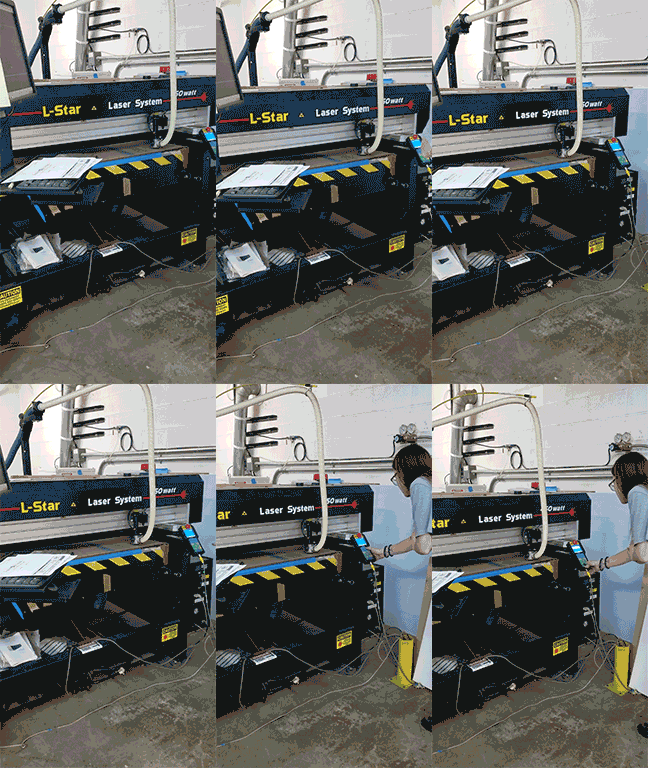
L-Star laser system used for precision cutting and component fabrication in commercial sign production.
Once structural elements are complete, visible components are fabricated:
-
Panels are cut and routed
-
Surfaces are painted or powder-coated
-
Graphics are printed and applied
-
Channel letters are assembled and wired
Color consistency, edge finishing, and surface durability all matter at this stage.
This is also where quality control checks occur. Measurements are verified against approved drawings before anything leaves the facility.
Illumination Assembly
For illuminated signage, internal electrical components are installed and tested before delivery.
This includes:
-
LED module placement
-
Power supply configuration
-
Internal wiring
-
Light diffusion testing
-
Brightness consistency checks
Lighting must align with approved specifications and local illumination standards.
Testing happens in the shop—so activation on-site isn’t guesswork.
Pre-Installation Quality Review
Before a sign is prepared for transport, it undergoes final inspection.
This review confirms:
-
Dimensions match permit drawings
-
Structural components align with engineering
-
Electrical systems function properly
-
Surface finishes meet brand expectations
Catching issues at this stage prevents delays during installation.
Once a crane is scheduled and a crew is mobilized, corrections become expensive.
Why Fabrication Is More Than Printing
A commercial sign is not a banner with bolts.
It’s engineered steel, finished surfaces, electrical integration, and structural compliance—working together as one unit.
When fabrication is managed internally rather than pieced together across multiple subcontractors, communication tightens and timelines stabilize.
Engineering flows into build.
Build flows into install.
That continuity protects the project.
Site Preparation & Installation
By the time installation begins, months of planning may already be behind the project. At this stage, precision matters more than speed.
Installation is the execution of approved plans—nothing more, nothing less.
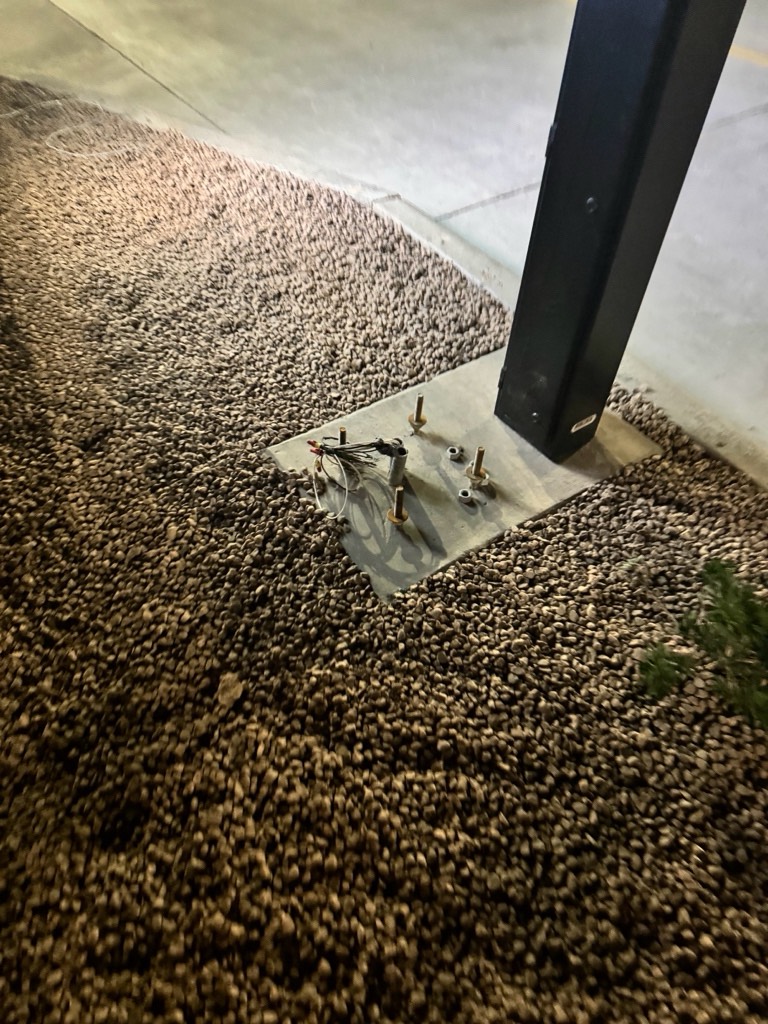
Structural base plate and anchor bolts prepared for commercial sign installation.
For monument and ground signs, installation often begins below the surface.
Preparation may include:
-
Verifying final placement against approved site plans
-
Confirming setbacks from right-of-way and property lines
-
Excavating for engineered footings
-
Installing rebar and anchor bolts
-
Scheduling required footing inspections
In Central Ohio, frost depth is a factor. Footings must extend below the frost line to prevent shifting during seasonal freeze-thaw cycles.
What holds the sign steady isn’t what you see above grade—it’s what’s anchored below.
Concrete & Cure Time
Once footings are formed and inspected, concrete is poured.
Depending on size and load requirements:
-
Cure time may range from several days to over a week
-
Structural strength must meet engineered specifications
-
Anchor alignment must be exact
Rushing this step risks long-term stability.
Commercial signage is expected to stand for years—not seasons.
Once the foundation is ready, the visible installation begins.
This may involve:
-
Crane placement for large cabinet or channel letter signs
-
Lift equipment for wall-mounted signage
-
Alignment and leveling checks
-
Securing structural connections
-
Weatherproofing penetrations
Install crews work directly from approved drawings. Measurements are verified again on-site to ensure compliance.
Deviation at this stage can trigger reinspection or corrective work.
Electrical Connection & Testing
For illuminated signage, a licensed electrician typically:
-
Connects to the designated power source
-
Installs disconnect switches
-
Verifies voltage requirements
-
Tests illumination output
Inspection may be required before activation, depending on the sign type.
Only after approval does the sign officially go live.
Final Inspection & Sign-Off
In many cases, the municipality conducts a final inspection to confirm:
-
Placement matches approved site plans
-
Structural components align with engineering
-
Electrical systems meet code
-
Illumination complies with standards
If the installed sign matches the submitted drawings, the project closes cleanly.
If not, corrections may be required before final approval.
Accuracy throughout the earlier stages determines how smooth this moment feels.
Installation Is the Visible Tip of the Process
To the public, installation day looks like the beginning.
In reality, it’s the final chapter.
A commercial sign is the result of zoning research, engineering coordination, permit approvals, structural fabrication, and calculated installation.
When each phase is handled correctly, installation becomes straightforward.
When corners are cut early, installation becomes expensive.
Timeline Expectations: How Long Does It Really Take?
One of the most common questions business owners ask is:
“How long until the sign is up?”
The honest answer: it depends on complexity, permitting, and coordination.
A typical commercial sign project in Columbus may look like this:
-
Zoning research: 3–10 business days
-
Engineering & drawings: 1–2 weeks
-
Permit review: 2–6+ weeks (varies by sign type and city workload)
-
Fabrication: 2–4 weeks
-
Installation: 1–3 days (plus cure time for concrete if required)
Projects involving historic districts, variances, or large structural signage may extend beyond this range.
The key is planning signage early—ideally alongside construction or tenant build-out. Waiting until the final stages of a project often creates unnecessary pressure.
A commercial sign is not an afterthought. It is part of the build.
Selecting the correct sign structure early — whether monument, wall-mounted, cabinet, or channel letters — can significantly affect engineering and permitting requirements. Explore common commercial signage types to understand how structure influences approval timelines.
Why Experience Changes Everything
There is a difference between making signs and managing sign projects.
Over time, patterns become familiar:
-
Which zoning districts trigger additional review
-
Which structural elements require stamped engineering
-
Which corridors have tighter illumination standards
-
Which permit details most commonly result in revisions
Experience doesn’t eliminate process.
It reduces friction within it.
When engineering aligns with fabrication, and fabrication aligns with installation, projects move predictably. Fewer surprises. Fewer revisions. Fewer delays.
Predictability is not flashy.
But in commercial development, it is invaluable.
What Most People Never See
By the time a sign is illuminated and visible from the road, the real work has already been done.
Months of coordination may sit behind that finished structure:
-
Code compliance
-
Structural planning
-
Electrical integration
-
Inspection approval
-
Material selection
-
Production precision
A commercial sign is not simply branding.
It is engineering, regulation, craftsmanship, and execution working together.
Built on Experience. Designed for What’s Next.
Since 1969, commercial signage has changed dramatically—materials, lighting systems, permitting systems, digital integration.
What has not changed is the importance of doing the work correctly.
Codes still matter.
Engineering still matters.
Foundations still matter.
Technology improves the process, but fundamentals remain.
A well-executed commercial sign should stand for years. It should withstand Ohio weather, pass inspection, and represent a business with confidence.
When the process is handled carefully from permit to installation, the result is more than a sign.
It is a permanent statement of presence.
Planning a Commercial Sign in Columbus?
Early coordination prevents delays. Proper engineering prevents rework. Clear permitting prevents surprises.
If you are planning a new commercial location, renovation, or rebrand, start the conversation before construction is complete.
A sign is one of the last elements installed—but one of the first things people see.
0 Comments