Not long ago, a lot of people predicted that traditional signage would fade away.
With digital ads, social media, listing websites, and mobile apps everywhere, it seemed inevitable that physical signs would become less important.
But something interesting happened.
They didn’t disappear.
In fact, printed signage continues to grow worldwide, with the global market now worth tens of billions of dollars and expanding steadily each year.
The reason is simple: signs do something digital marketing can’t.
They exist in the real world, exactly where decisions are being made.
When someone drives through a neighborhood, walks into a shopping district, or pulls into a business parking lot, signage becomes the first conversation between a business and its customers.
In real estate especially, that small panel in the front yard still plays a surprisingly important role. While most buyers begin their search online, yard signs remain one of the most widely used marketing tools agents rely on to promote listings.
The modern sign isn’t replacing digital marketing.
It’s working alongside it.
And when the design, materials, and placement are done right, signage becomes one of the most powerful tools a business or agent has to attract attention, build trust, and guide people toward a decision.
↑ Back to top
Are Printed Signs Still Effective in a Digital World?
In a world dominated by websites, mobile apps, and online advertising, it’s easy to assume that traditional signage has become less important. But in reality, printed signs still play a critical role in how businesses attract attention and guide customers.
The key reason is simple: signs exist where decisions are actually being made.
When someone drives through a neighborhood, passes a storefront, or walks through a commercial district, signage becomes the first point of contact between a business and the public. A well-placed sign works continuously, creating visibility in the physical environment where people live, work, and shop.
Printed signage is also one of the most effective forms of location-based marketing. Unlike digital ads that appear anywhere on the internet, signs communicate directly with people who are already nearby. For local businesses, this kind of immediate visibility is incredibly valuable because it connects with customers at the exact moment they may be ready to act.
In many cases, signage also reinforces what customers have already discovered online. A buyer might first see a home listing on a real estate website or learn about a business through social media. When they later drive past the property or storefront and see a professional sign in place, it confirms the information they saw online and helps guide them to the location.
Rather than competing with digital marketing, printed signs work alongside it. Together, they create a complete visibility strategy—online discovery paired with real-world presence.
Why Printed Signage Continues to Grow Worldwide
Despite the rapid expansion of digital advertising, printed signage continues to grow as a global industry. Businesses across many sectors still rely on physical signs to create visibility, communicate their brand, and attract customers in the real world. In fact, the global printed signage market is valued in the tens of billions of dollars and continues to expand steadily as businesses invest in durable, high-impact signage.
One reason for this continued growth is that physical visibility remains essential for local businesses. Restaurants, retail stores, service providers, and professional offices all depend on being seen by people passing nearby. A storefront sign, monument sign, or directional sign helps customers identify a location quickly and confidently. Even in a digital-first world, businesses still need a clear physical presence that tells people exactly where they are and what they offer. Businesses across many sectors still rely on commercial signage to create visibility, communicate their brand, and attract customers in the real world.
Printed signage also plays an important role in brand recognition. Consistent colors, logos, and messaging displayed on signs help reinforce a company’s identity over time. When customers repeatedly see the same branding on storefront signs, monument signs, vehicle graphics, or yard signs, it builds familiarity and trust. This kind of visual repetition is something digital advertising alone cannot fully replace.
For many businesses, the most effective marketing strategy combines both digital and physical channels. Online ads may introduce a brand, but signage reinforces that message in the environment where customers interact with the business every day. That combination is one of the reasons printed signage continues to remain relevant—and continues to grow worldwide.
Despite the rise of digital advertising, the global signage industry continues to grow as businesses invest in both physical and digital visibility. Printed signage remains a major part of that mix, especially for retail, real estate, and local businesses that need to be seen in the real world.
| Market Segment | Current Estimate | Projected Growth | What It Means |
|---|---|---|---|
| Global Sign Market | $119.28 billion (2026) | $144.27 billion by 2030 | Businesses are still investing heavily in signage to attract customers and strengthen visibility. |
| Global Printed Signage Market | $43.63 billion (2026) | $49.58 billion by 2031 | Printed signage continues to hold strong value for real estate, retail, events, and local marketing. |
| Global Digital Signage Market | $31.09 billion (2025) | $58.42 billion by 2033 | Digital signage is growing quickly, but it is typically used alongside physical signage rather than replacing it. |
| North America Printed Signage Market | $12.46 billion (2026) | $13.71 billion by 2031 | Demand for printed signs remains steady across retail, construction, real estate, and business branding. |
These numbers tell a simple story: businesses still rely on physical signage to connect online discovery with real-world locations. Even as digital displays grow, printed signs continue to play an essential role in brand recognition, local visibility, and guiding customers to the door.
Sources:
The Business Research Company,
Mordor Intelligence,
Grand View Research,
Mordor Intelligence – North America
Why Real Estate Signs Still Matter for Property Marketing
In real estate, signage remains one of the most recognizable and widely used marketing tools available to agents. While most home searches begin online today, real estate signs still play an important role in connecting buyers with properties once they begin exploring neighborhoods in person. Professionally designed real estate signs help buyers identify properties quickly while reinforcing an agent’s brand in the neighborhood.
One of the biggest advantages of real estate signage is neighborhood discovery. Many buyers drive through communities they are interested in before scheduling showings or contacting an agent. A clearly visible yard sign allows them to quickly identify properties that may not have been on their radar during an online search. In many cases, it’s the sign that introduces a buyer to a listing they didn’t know existed.
Real estate signs also provide an element of buyer reassurance. When potential buyers arrive in an area they’ve been researching online, seeing a professional sign in the yard confirms they’ve found the correct property. It adds credibility to the listing and gives buyers confidence that they’re in the right place.
For agents, signage is also an important branding opportunity. A well-designed sign featuring an agent’s name, brokerage, and contact information serves as a form of ongoing advertising within the neighborhood. Even residents who are not currently buying or selling may notice the sign, helping build familiarity with the agent’s brand over time.
Finally, real estate signs are essential for promoting open houses and property tours. Directional signs and riders guide potential buyers to the property and help increase foot traffic during scheduled events. In competitive markets, that extra visibility can make a meaningful difference in how quickly a home attracts interest.
While digital listings may start the search, real estate signage continues to play a key role in helping buyers discover, confirm, and visit properties in the real world.
What Makes a High-Quality Sign Last Longer
Not all signs are built the same. The difference between a sign that fades or fails after a few months and one that continues to look professional for years often comes down to the materials, printing methods, and hardware used during production.
One of the most important factors is the material itself. For temporary applications such as yard signs and event signage, corrugated plastic is widely used because it is lightweight, weather-resistant, and affordable. For longer-term installations, PVC panels are often a preferred choice for outdoor signage. PVC is rigid, weather-resistant, and provides a smooth surface that holds printed graphics clearly. Its durability and resistance to moisture make it a dependable material for signs that need to maintain their appearance outdoors.
The printing method also plays a significant role in how well a sign holds up over time. Modern wide-format printers allow graphics to be printed directly onto sign substrates with high resolution and strong color saturation. When combined with quality inks and proper curing processes, the result is a graphic that remains sharp and legible even after extended outdoor use.
Another key element is UV resistance. Sunlight is one of the biggest challenges for outdoor signage, gradually causing colors to fade and materials to degrade. High-quality signage often includes UV-resistant in
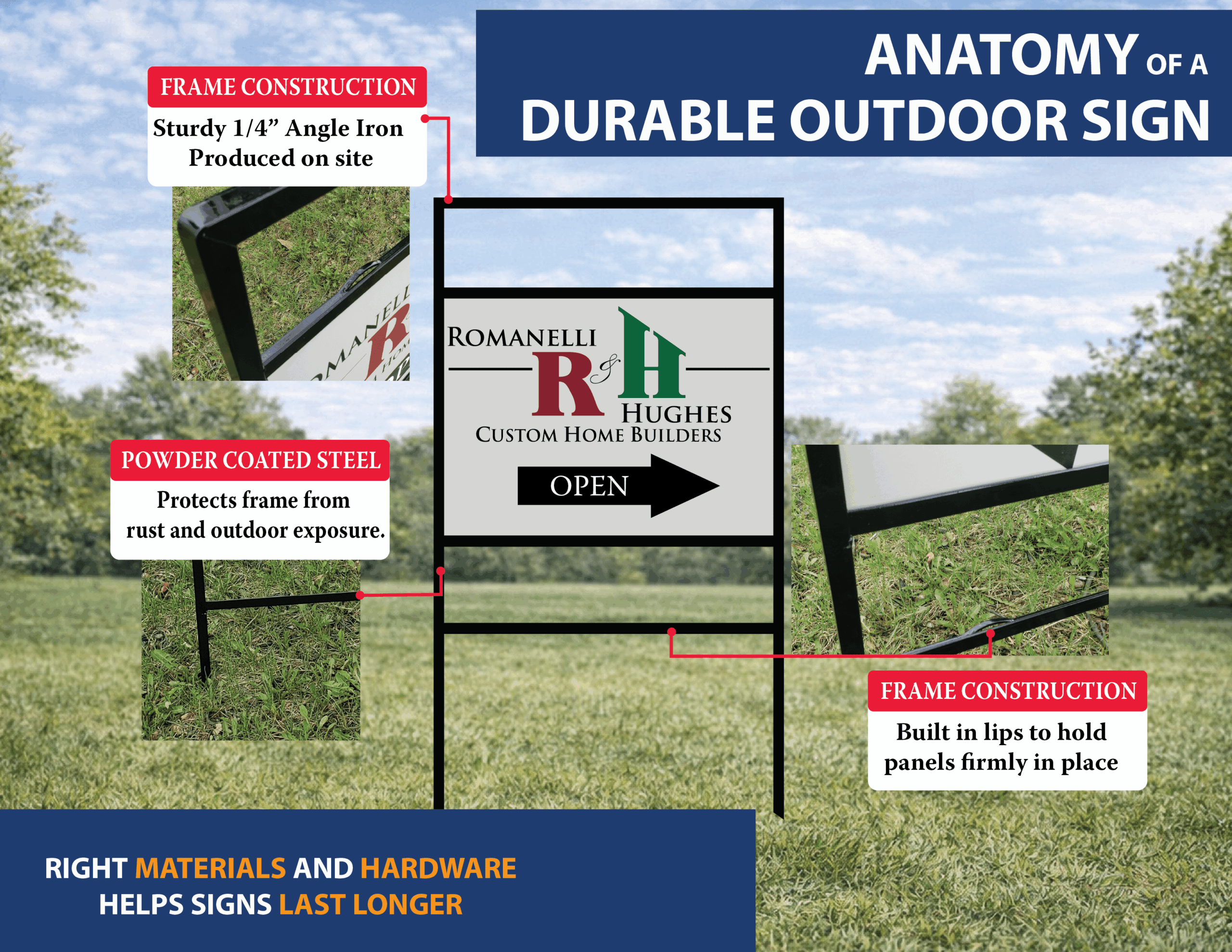
Commercial-grade angle iron frames with built-in lips hold sign panels securely and withstand outdoor conditions.
ks, laminates, or coatings designed to protect graphics from prolonged sun exposure. This helps maintain vibrant colors and a professional appearance for a longer period of time.
Finally, the mounting hardware and installation method can significantly affect a sign’s lifespan. Proper supports, frames, and fasteners help keep signage stable in wind and weather. Whether a sign is mounted to a frame, installed on posts, or integrated into a larger commercial sign structure, strong hardware ensures the sign remains secure and properly positioned.
When these elements are combined—durable materials, professional printing, UV protection, and solid mounting hardware—the result is a sign that continues to represent a business or property well long after installation. Businesses comparing lighting options may also want to explore our guide on neon vs LED signs.
Why Speed Matters in Modern Sign Production
In today’s fast-moving business environment, timing can be just as important as the sign itself. Whether it’s a new property hitting the market, a business announcing a promotion, or a storefront preparing for its grand opening, signage often needs to be produced quickly to support those moments.
In real estate, listings can move rapidly. Agents often need signs installed within hours or days of a property going live so buyers driving through the neighborhood can immediately see that the home is available. A delay in getting signage installed can mean missed visibility during the most active period of interest for a listing.
Businesses face similar challenges when running promotions, seasonal campaigns, or special events. Temporary signs, banners, and window graphics help communicate limited-time offers and attract attention from passing customers. When those signs are produced quickly, businesses can take advantage of opportunities as they arise instead of waiting days or weeks for materials to arrive.
Speed is also critical for new business openings. When a company is preparing to open its doors, signage is one of the final steps that brings the entire location together. Storefront signs, monument signs, and interior graphics help establish the brand and guide customers to the right place from the very first day of operation.
This is why many businesses look for sign providers that offer in-house fabrication and efficient production workflows. When design, printing, and fabrication happen within the same operation, projects can move from concept to installation much more quickly. The result is signage that arrives when it’s needed—helping businesses stay on schedule and make the most of important marketing moments.
How Signs Work Together With Digital Marketing
Today’s most effective marketing strategies rarely rely on just one channel. Instead, businesses combine digital visibility with real-world presence to create a consistent experience for customers. In many cases, signage plays an important role in reinforcing what people first discover online.
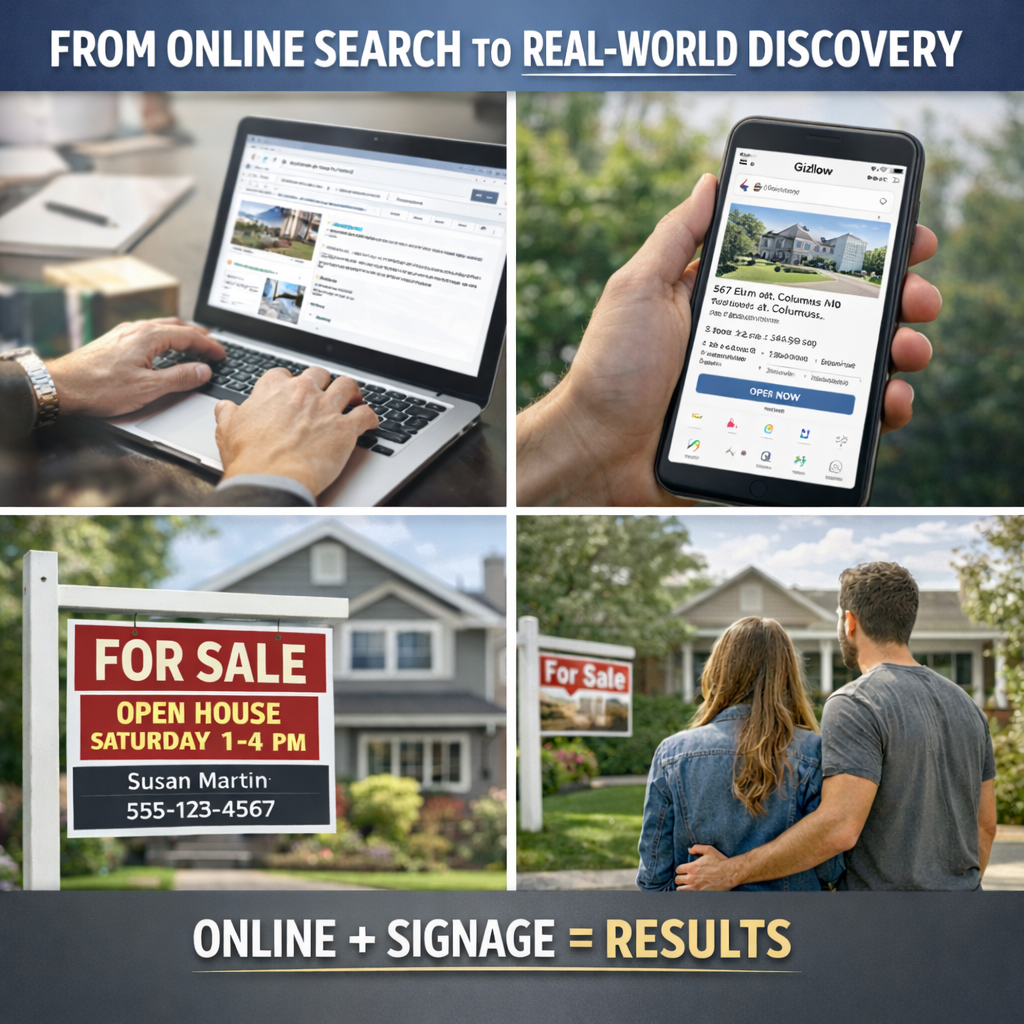
Online marketing introduces businesses and properties, while physical signage helps customers find them in the real world.
For example, a customer may initially find a business through a Google search, a social media post, or an online listing. But when they later drive past the location and see a professionally designed sign in place, it provides physical confirmation that the business is exactly where they expected it to be. That moment helps connect the digital experience with the real-world location.
Signs also strengthen location reinforcement. Even when customers already know about a business, clear signage makes it easier for them to recognize the building, find the entrance, and feel confident they’ve arrived at the right place. For retail stores, restaurants, and service businesses, that visibility can make the difference between someone stopping in or continuing down the road. Clear signage such as storefront signs or monument signs helps customers recognize a location quickly and confidently.
Another benefit of signage is brand repetition. Customers may see a company’s logo online, in advertisements, and again on physical signs in the community. Each time they encounter that brand, it reinforces recognition and builds familiarity. Over time, that repetition helps businesses stay top-of-mind when customers are ready to make a purchase or contact a service provider.
When digital marketing and physical signage work together, they create a stronger overall presence. Online platforms help customers discover businesses, while signage confirms their location, reinforces their brand, and helps guide people to the door. Many businesses use illuminated options like channel letter signs to make their storefront visible both day and night.
Choosing the Right Sign Partner for Your Business
Selecting the right sign provider is an important part of ensuring that signage continues to perform well over time. While a sign may seem like a simple product, the quality of the materials, design, fabrication, and installation all play a role in how effective and long-lasting it will be.
One of the first considerations is durability. Outdoor signage is exposed to sun, wind, rain, and changing temperatures throughout the year. Signs built with quality materials and proper fabrication methods are far more likely to maintain their appearance and structural integrity over time. Investing in durable signage helps businesses avoid the cost and inconvenience of frequent replacements.
Another key factor is design expertise. A sign needs to do more than display a name—it must communicate clearly and attract attention. Professional designers understand how to balance colors, fonts, layout, and readability so that signage remains visible and effective from a distance. Good design ensures that the message is clear and the brand is represented consistently.
Installation knowledge is equally important. Many commercial signs require careful planning, permits, electrical connections, or structural supports. Experienced sign installers understand local regulations, safety requirements, and the technical aspects of mounting signage securely so it performs properly once it is in place.
Finally, working with a sign provider that has local experience can make the entire process smoother. Local companies are familiar with zoning rules, installation challenges, and the needs of businesses within the community. That experience helps guide projects from concept to installation more efficiently.
When businesses partner with a knowledgeable sign company that understands durability, design, installation, and local requirements, they gain more than just a sign—they gain a long-term asset that supports their visibility and brand presence for years to come.
The Enduring Power of Printed Signage
Technology continues to transform how businesses connect with customers, but one thing has remained consistent: people still live, work, and make decisions in the physical world. That’s why signage continues to play such an important role in modern marketing.
Printed signs provide something digital advertising alone cannot—a constant, visible presence in the places where customers are already moving through their day. From real estate listings and storefront signs to monument signs and directional signage, well-designed signs help guide people, reinforce brand recognition, and create confidence in a business or property.
Rather than replacing traditional signage, digital marketing has actually made it more valuable. Online platforms help customers discover businesses and properties, while physical signs confirm locations, reinforce brand identity, and help people find exactly where they need to go.
For businesses, agents, and organizations, the most effective strategy is not choosing between digital and physical marketing—it’s using both together. When professional design, durable materials, and experienced installation are combined with a thoughtful marketing approach, signage becomes a long-term investment in visibility and credibility.
In a world that continues to evolve digitally, one thing remains clear: printed signs still matter.
0 Comments